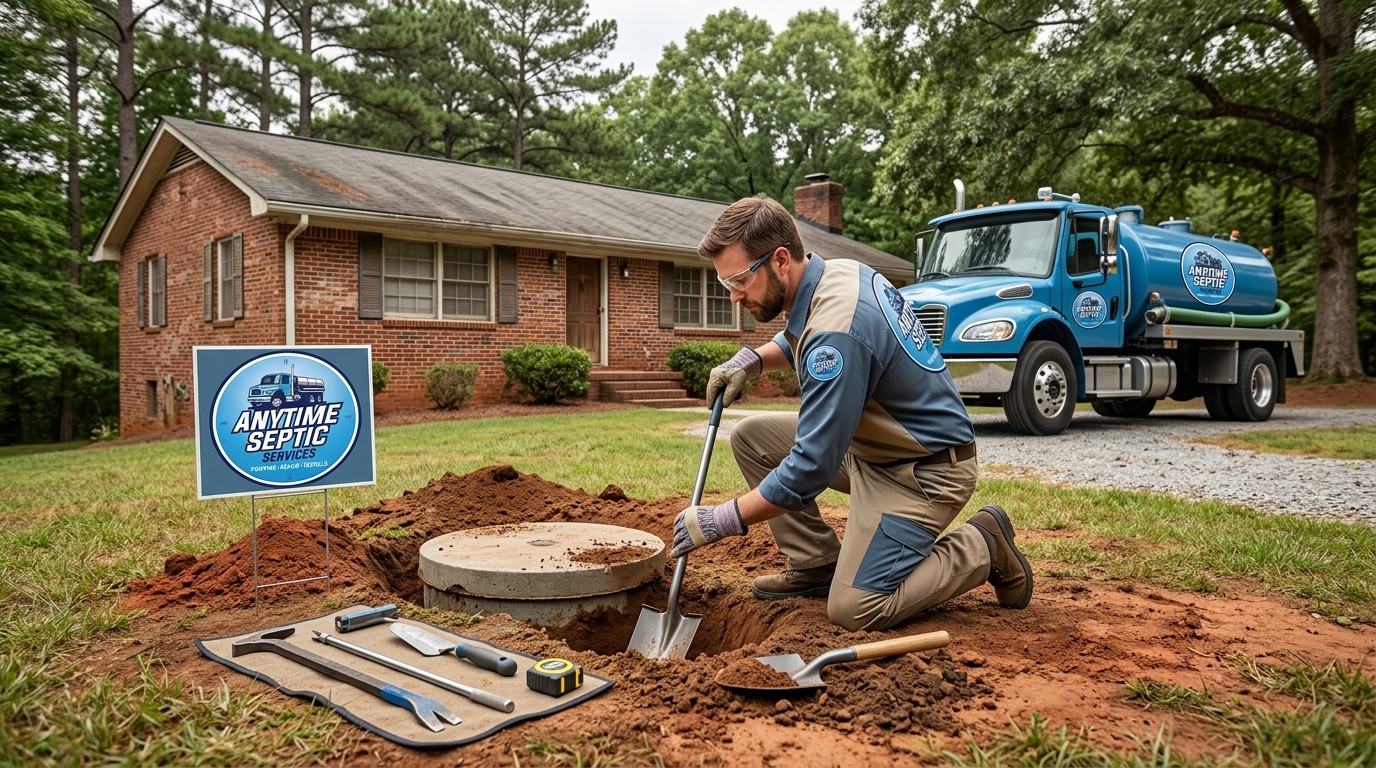
Why So Many Rome Homes Run on Septic
Rome sits at the meeting point of the Etowah and Oostanaula rivers, surrounded by rolling hills and farmland. Once you get outside the city sewer lines, most of Floyd County is rural or semi-rural. That means septic systems, not city sewer.
If you live along the Kingston Road corridor, out past Berry College, or in neighborhoods off Shorter Avenue and Turner McCall Boulevard that sit just beyond the city water and sewer district, chances are good you’re on a septic system. The same goes for homes in North Rome and the unincorporated areas stretching south and east of town. Floyd County has a lot of older properties on private wells and septic, and many of those systems have been in the ground for 20, 30, even 40 years.
These systems work well when they’re maintained. The trouble is that a lot of homeowners don’t think about their septic tank until something goes wrong.

Common Tank Sizes in the Rome Area
Most residential septic tanks we see in Floyd County range from 750 gallons to 1,500 gallons. The 1,000-gallon tank is by far the most common for a standard three-bedroom home. Older homes built before the 1980s sometimes have smaller 750- or 900-gallon tanks, while newer homes with four or five bedrooms often have 1,250- to 1,500-gallon tanks.
If you don’t know your tank size, that’s fine. We can figure it out during a pump-out. It’s one of the first things we check.
What Septic Pumping Costs in Rome, GA
In the Rome and Floyd County area, a standard residential septic tank pump-out typically runs between $350 and $600. The final price depends on a few things:
- Tank size. A 750-gallon tank costs less to pump than a 1,500-gallon tank.
- How full the tank is. A tank that hasn’t been touched in 10 years takes more time than one on a regular 3-year schedule.
- Access to the lid. If the lid is buried under a foot or more of dirt, we need to locate it and dig down to it. That adds time and cost.
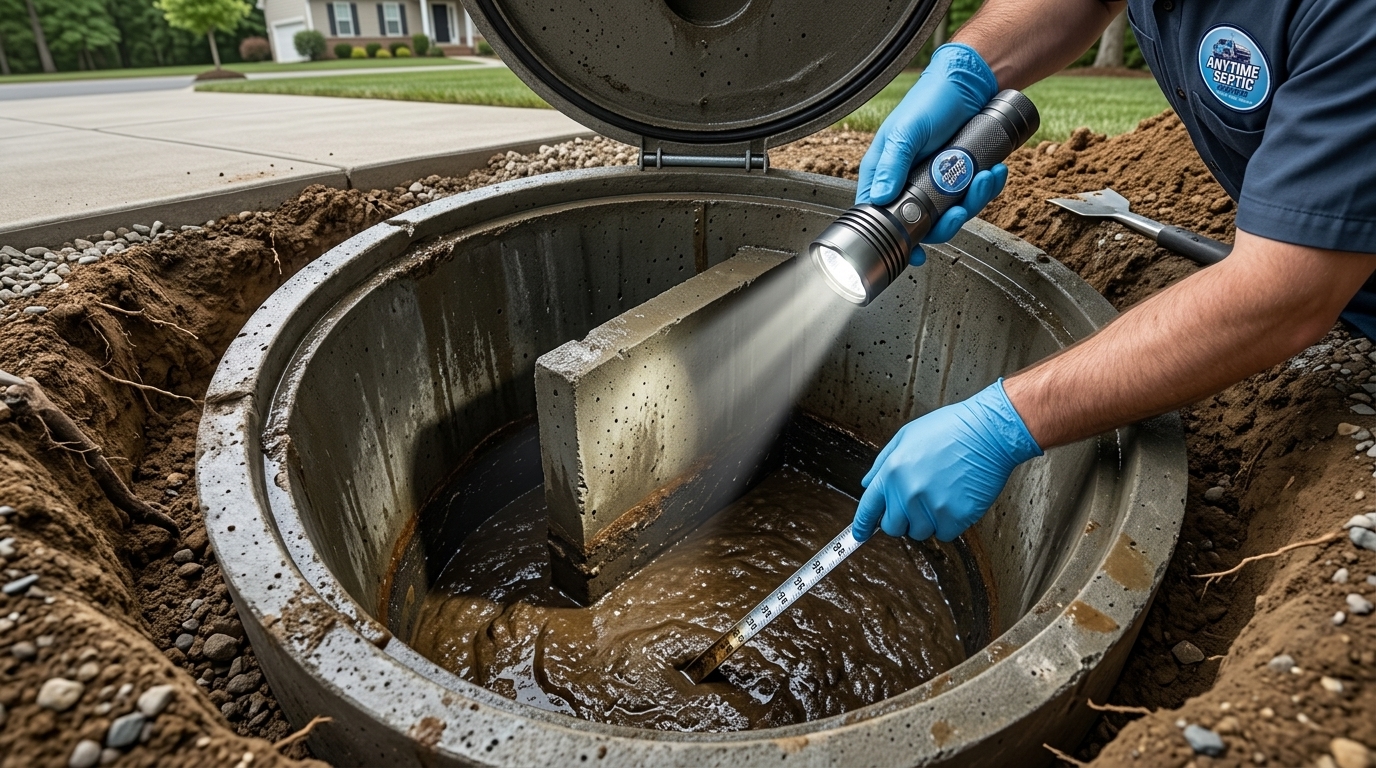
- Tank condition. If we open the lid and find damaged baffles or other issues, we’ll let you know and talk through your options.
- Installing a riser (a green or black lid that sits at ground level) saves money on every future pump-out because we don’t have to dig. It’s a one-time expense that pays for itself quickly.
Floyd County Soil Conditions and What They Mean for Your System
Floyd County has two main soil types that affect septic performance. Up on the ridges and hillsides, you get the classic red clay that’s common across northwest Georgia. Clay soil drains slowly, which means your drain field has to work harder to absorb and filter the effluent coming out of your tank.

Down in the valleys near the Etowah and Oostanaula rivers, the soil shifts to alluvial deposits: sandy, silty material left by centuries of river flooding. This soil drains faster, but it also means a higher water table in some areas, especially during wet seasons. Properties near the river corridors can see groundwater rise close to drain field level after heavy rain, which puts extra stress on the system.
Both situations make regular pumping more important, not less. Clay soil means your drain field is already working at a disadvantage. River valley soil means seasonal water table changes can push your system to its limits. Keeping your tank pumped on schedule gives the drain field the best chance to do its job.

How Often to Pump in Floyd County
The standard recommendation is every 3 to 5 years for most households, and that holds true in Floyd County. But local conditions can push you to the shorter end of that range.
- Red clay areas: Plan on every 3 years. The slow drainage puts more demand on your system, and you want to keep the solids out of the drain field.
- River valley properties: Every 3 to 4 years, especially if your property floods or the yard stays wet for extended periods.
- Larger households (4+ people): Every 2 to 3 years regardless of soil type. More people means more water and more solids.
- Homes with garbage disposals: Reduce your interval by about a year. Ground food waste adds to the sludge layer faster than most people realize.
- For a deeper look at pumping schedules based on tank size and household size, check out our full guide on how often to pump your septic tank.
What Happens During a Pump-Out
If you’ve never had your septic tank pumped, or it’s been a while, here’s what to expect when our truck shows up.
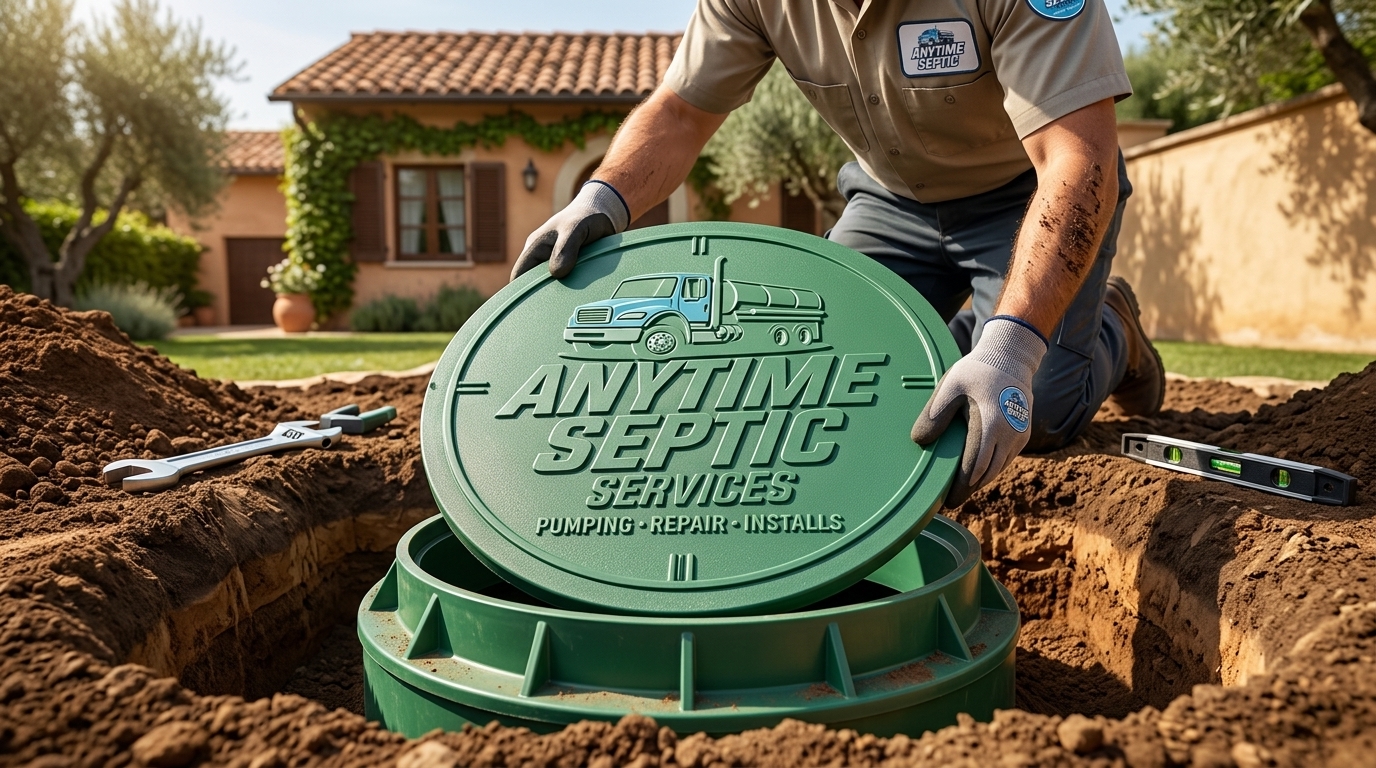
- We locate and uncover the lid. If you know where your tank is, that speeds things up. If not, we’ll find it.
- We open the lid and assess the tank. Before we pump, we look at the sludge and scum levels, check the inlet and outlet baffles, and note the overall condition.
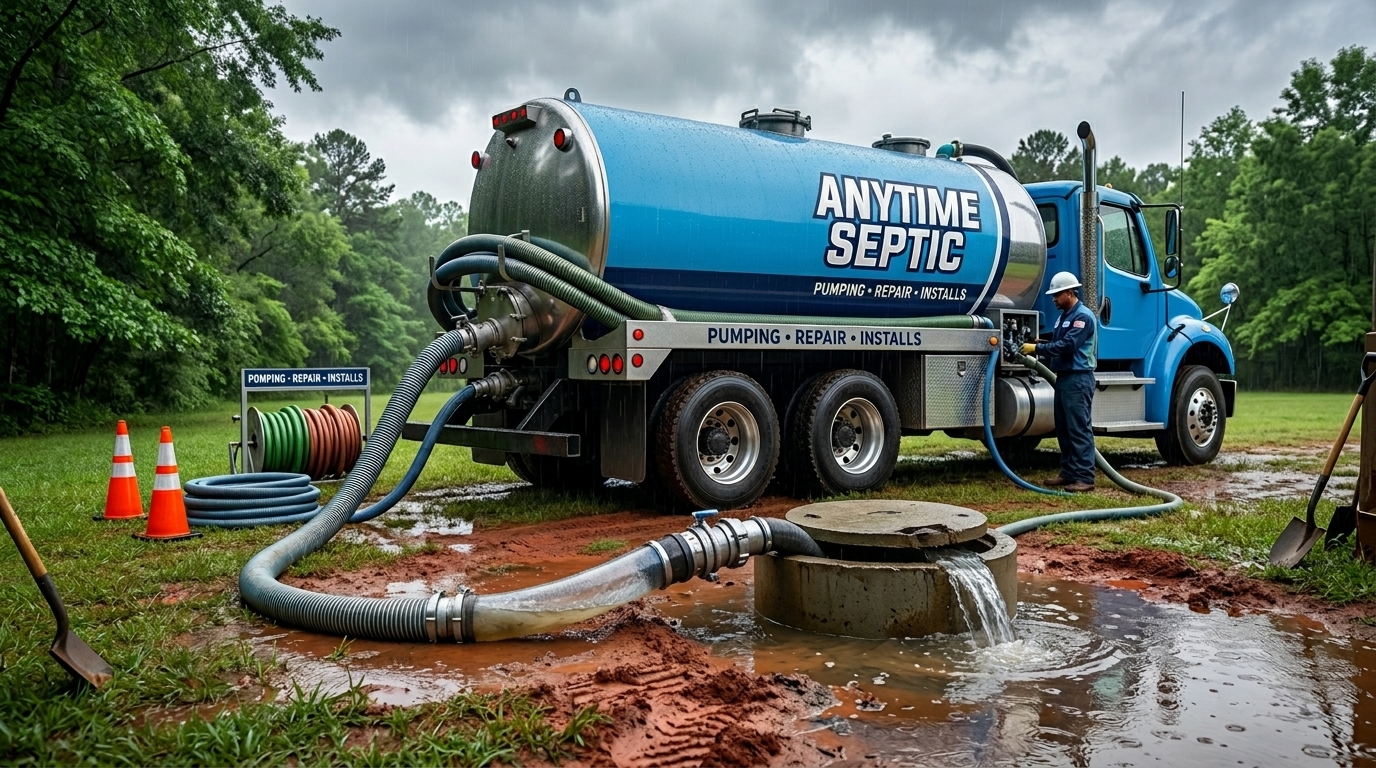
- We pump the tank. Our vacuum truck pulls out all the liquid, sludge, and scum. A typical pump-out takes 20 to 45 minutes depending on tank size and condition.
- We inspect after pumping. With the tank empty, we can see the walls, baffles, and fittings clearly. If anything looks worn or damaged, we’ll point it out and explain what it means.
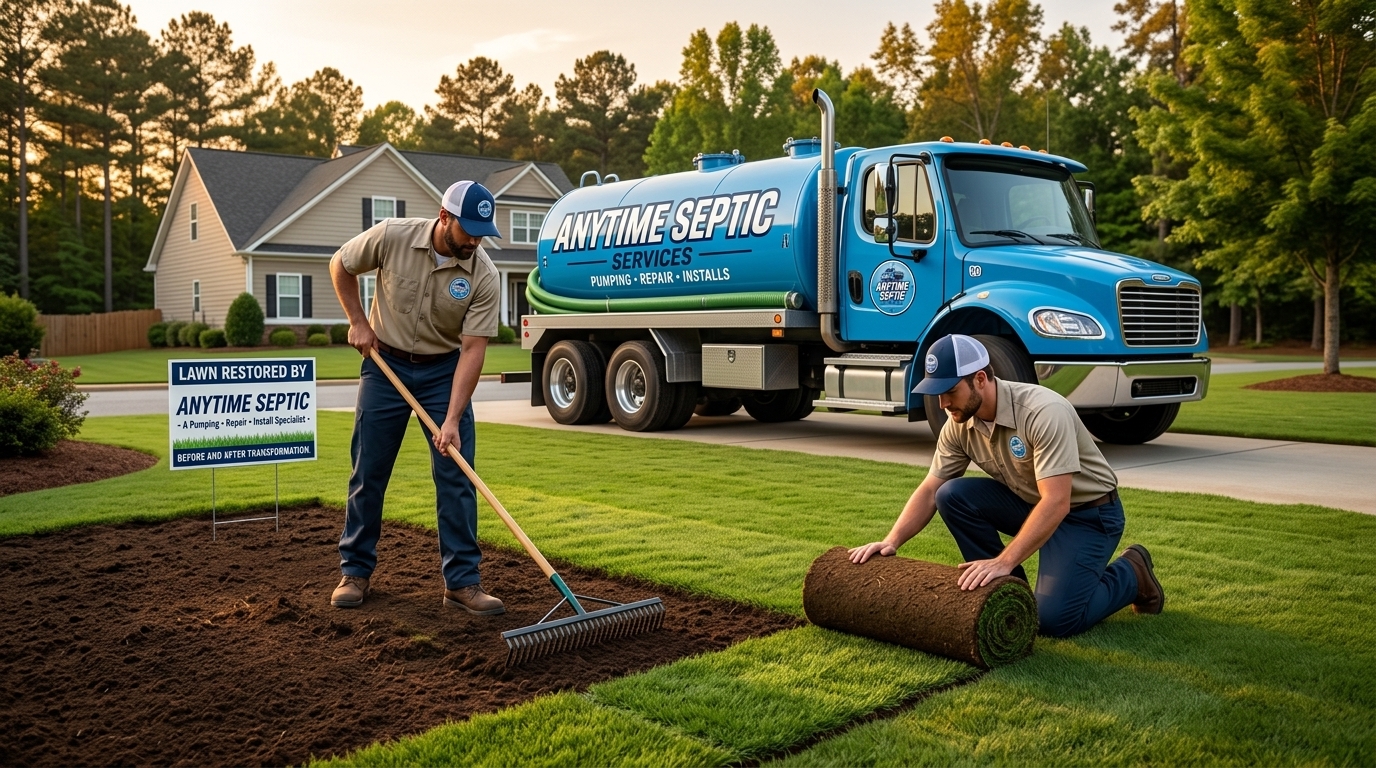
We close up and clean up. We replace the lid, fill in any excavation, and haul the waste to an approved disposal facility.
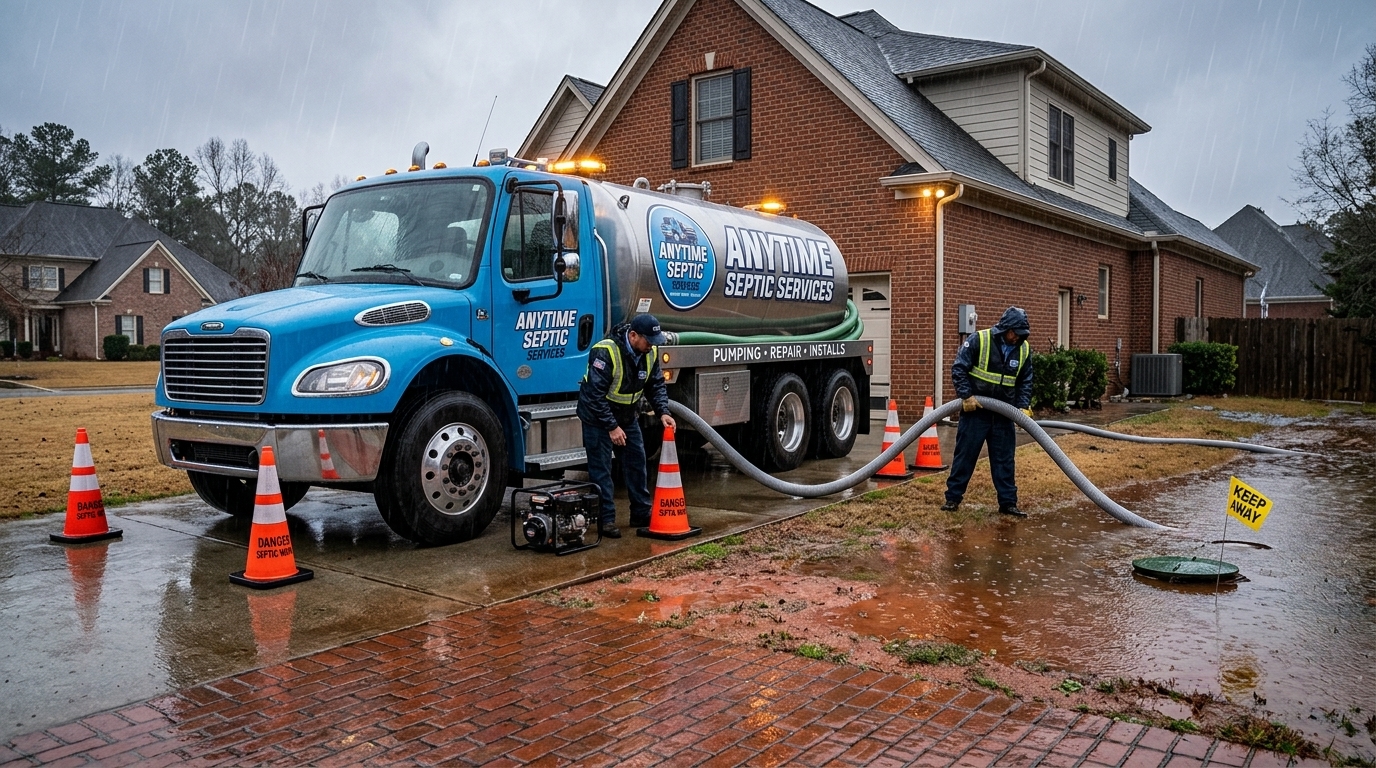
The whole visit usually takes about an hour. We leave the area the way we found it.
Signs You’re Overdue for Pumping
These are the warning signs that your tank is full or close to it:
- Slow drains throughout the house. One slow drain might be a clog. Every drain running slow at the same time points to a full tank.
- Sewage odors in the yard or near drains. That sulfur smell means waste isn’t being processed the way it should be.
- Wet or soggy spots in the yard near the tank or drain field. This can mean effluent is surfacing because the system is overloaded.
- Gurgling sounds from toilets or drains. Air gets trapped in the lines when waste has nowhere to go.
- If you notice any of these, don’t wait. A full tank that overflows into the drain field can cause thousands of dollars in damage. A pump-out now is a lot cheaper than a drain field replacement later.
Floyd County Septic Permits and Regulations
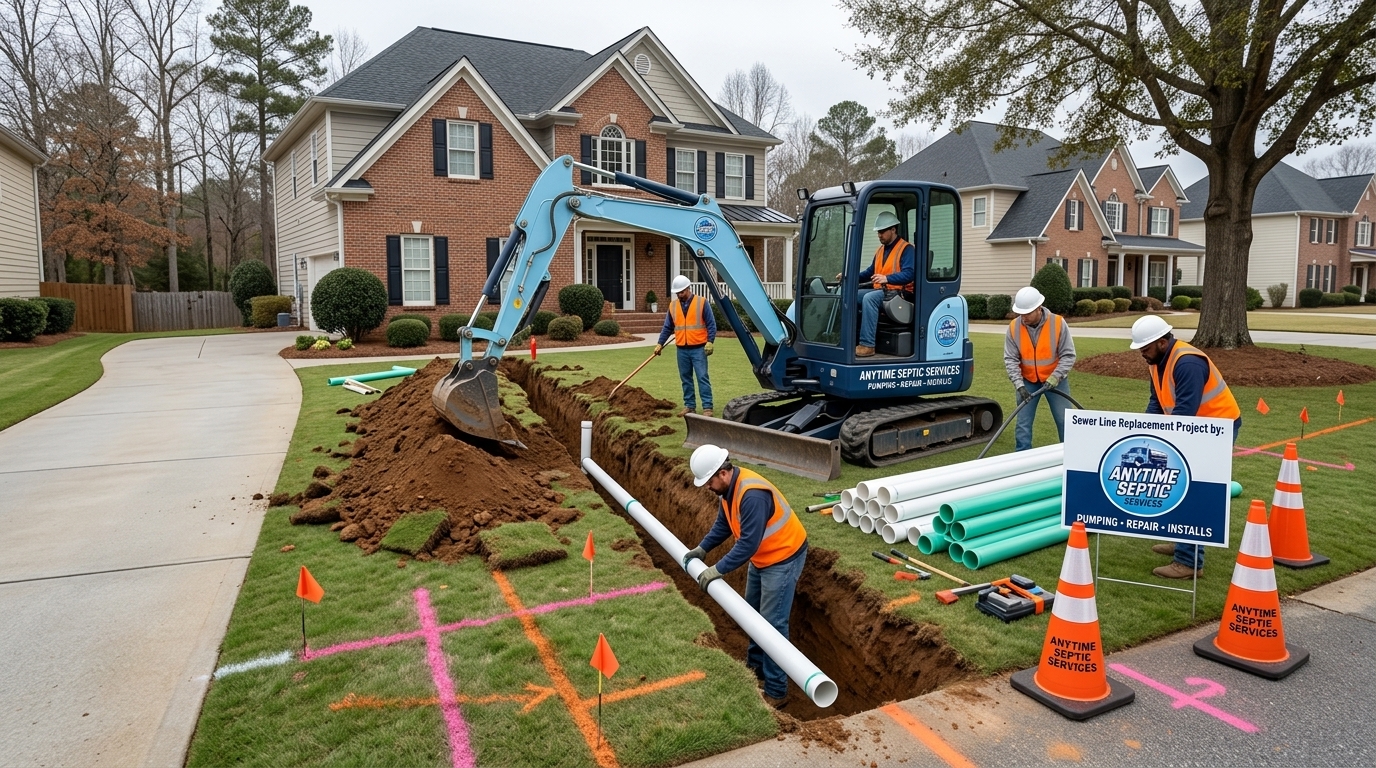
Floyd County requires a septic permit for any new system installation or major repair. The Floyd County Environmental Health Department handles permitting and inspections. Before any work begins on a new system, the county requires a site evaluation, including soil testing and a perc test, to determine whether the property can support a septic system and what type of system is appropriate.
If you’re buying or selling a home in Floyd County, the county may require a septic inspection as part of the transaction. Even if it’s not required, having your system pumped and inspected before closing protects both parties

For the most current permit requirements and fees, contact the Floyd County Environmental Health Department directly. Regulations can change, and they’ll have the latest information.
Anytime Septic Now Serves Rome and Floyd County
Our family has built Anytime Septic by taking care of homeowners in Dallas, Cartersville, Adairsville, and Taylorsville. Now we’re bringing that same hands-on, family-run service to Rome and the rest of Floyd County.
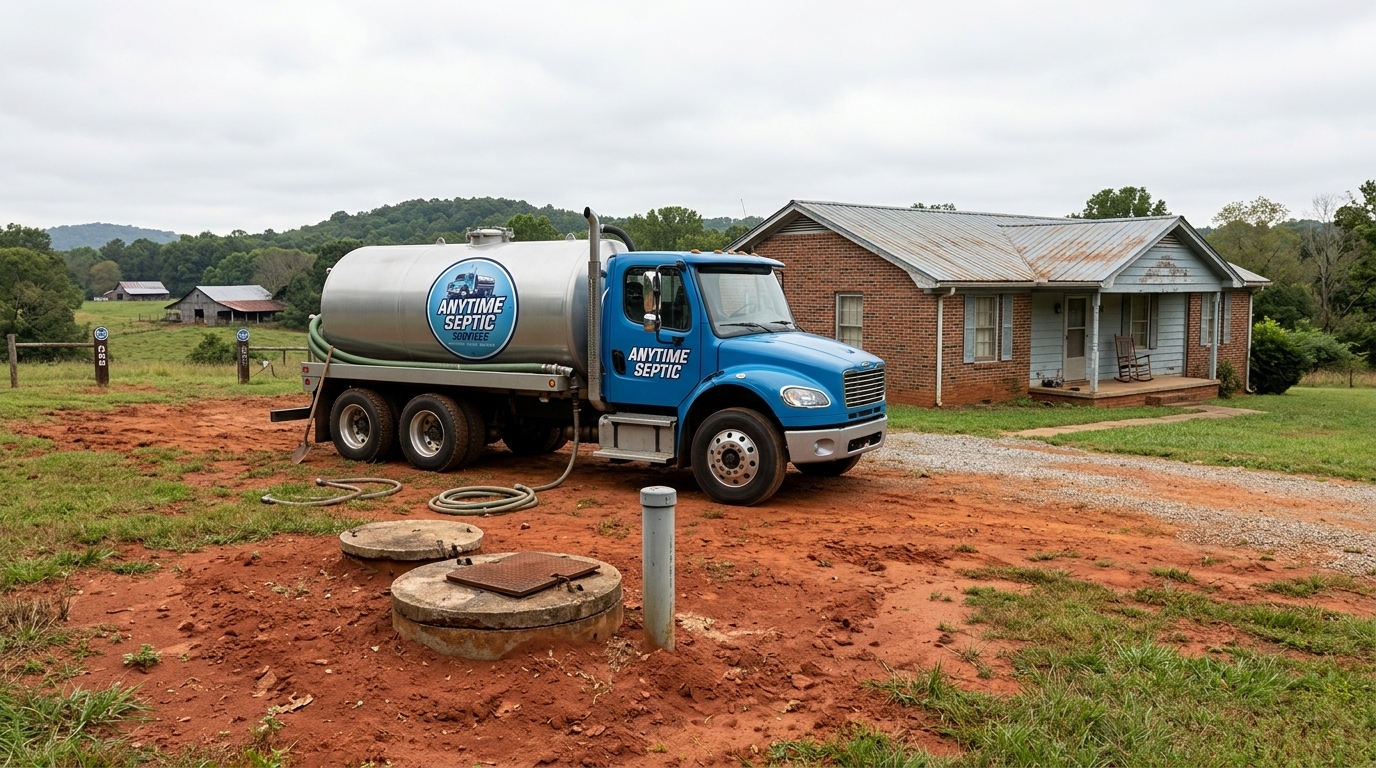
We show up on time, we do the work ourselves, and we explain what’s going on with your system in plain language. No surprises, no upsells, just honest septic tank pumping and cleaning from a crew that does this work every single day.
If you’re in the Rome area and need your tank pumped, or you’re not sure when it was last serviced, we’re happy to come out and take a look. Learn more about our septic service in Rome, GA.