

The Short Answer: Every 3 to 5 Years
For most households, pumping your septic tank every 3 to 5 years is the standard recommendation. The EPA says the same thing, and it lines up with what we see in the field every single day.
But here’s the thing. “Every 3 to 5 years” is a general guideline, not a hard rule. A retired couple living in a two-bedroom house on 10 acres outside Adairsville has very different septic demands than a family of six in a four-bedroom home near Dallas. The right schedule for your home depends on several factors, and understanding those factors can save you a lot of money and headaches down the road.

What Affects Your Pumping Schedule
Household Size
This is the biggest factor, plain and simple. More people in the house means more water going down the drains and more solids entering the tank. A single person or a couple can usually stretch to the 5-year mark without any issues. A family of four or five? You’re looking at every 2 to 3 years in most cases.
We pump a lot of tanks in the Taylorsville and Cartersville area where families have been on the same property for generations. Grandparents, parents, kids all under one roof. Those tanks fill up fast. If that sounds like your household, staying on top of your pumping schedule is especially important.

Tank Size
Most residential septic tanks in Georgia range from 750 gallons to 1,500 gallons. A 1,500-gallon tank has twice the capacity of a 750-gallon tank, so naturally it takes longer to fill up.
If you’re not sure what size tank you have, we can help you figure that out. A lot of homeowners in our area have 1,000-gallon tanks, which is the most common size we see. If your home was built before the 1980s, there’s a decent chance your tank is on the smaller side, maybe 750 or 900 gallons.
Water Usage Habits
The amount of water your household uses has a direct impact on how fast your tank fills. High-efficiency washing machines and low-flow toilets can extend the life between pump-outs. On the other hand, running multiple loads of laundry in a single day, taking extra-long showers, or leaving faucets running all adds up.
One thing we tell folks around here: try to spread your laundry out over the week instead of doing it all on Saturday. Your septic system needs time to process the water that flows into it. Flooding the tank with 5 or 6 loads in one day doesn’t give the solids time to settle properly.

Garbage Disposal Use
If you have a garbage disposal, your tank is working harder than you might think. All that ground-up food waste goes straight into the septic tank and adds to the sludge layer. Homes with garbage disposals typically need pumping 30 to 50 percent more often than homes without one.
We see this all the time on service calls. A homeowner will say they’re right on schedule for a 3-year pump-out, but when we open the lid, the tank is already past due. Nine times out of ten, they have a garbage disposal running daily. If you rely on one, plan on pumping closer to every 2 years for a family of four.
Use of Harsh Chemicals or Antibacterial Products
Your septic tank relies on natural bacteria to break down solid waste. When you pour bleach, drain cleaners, antibacterial soaps, or other harsh chemicals down your drains, you’re killing off the bacteria that keep your system working.
That doesn’t mean you can never use bleach. Normal household cleaning in reasonable amounts won’t destroy your system. But if you’re dumping a bottle of drain cleaner down the pipes every month, you’re asking for trouble. The bacteria can’t keep up, the solids don’t break down as well, and the tank fills faster.

Pumping Schedule by Tank Size and Household
Here’s a general guide for how often to pump your septic tank based on tank size and the number of people in your home. These are estimates for typical water usage.
Tank Size | 1-2 People | 3 People | 4 People | 5+ People |
|---|---|---|---|---|
750 gallon | Every 4-5 years | Every 2-3 years | Every 1-2 years | Annually |
1,000 gallon | Every 5-6 years | Every 3-4 years | Every 2-3 years | Every 1-2 years |
1,250 gallon | Every 6-7 years | Every 4-5 years | Every 3 years | Every 2 years |
1,500 gallon | Every 8-9 years | Every 5-6 years | Every 3-4 years | Every 2-3 years |
Keep in mind these numbers assume no garbage disposal and average water usage. If you have a garbage disposal, shift everything one column to the right. And if you’re ever unsure, you can always check your septic tank level to see where things stand before scheduling a pump-out.

Signs You Need to Pump Sooner Than Scheduled
Even if you’re following a regular schedule, sometimes your tank fills up faster than expected. There are a few warning signs of septic tank failure that tell you it’s time to call for a pump-out sooner rather than later:
- Slow drains throughout the house. If one drain is slow, it might just be a clog. If every drain in the house is sluggish, your tank is probably full.
- Sewage odors in the yard or near drains. That smell isn’t something to ignore. It means waste isn’t being processed properly.
- Standing water or soggy ground near the tank or drain field. This can mean the tank is overflowing or the drain field is struggling.
- Gurgling sounds in the plumbing. Air trapped in the lines because waste has nowhere to go.
- Sewage backup in the house. This is the worst-case scenario, and by this point, you need help fast.
If any of these sound familiar, take a look at our full guide on how to tell if your septic tank needs pumping for a more detailed breakdown.


What Happens If You Wait Too Long
This is where I get real honest with people. Skipping a pump-out to save a few hundred dollars can cost you thousands. I’ve seen it happen more times than I can count, and it never ends well.
Sludge Builds Up Past the Baffle
Inside your tank, there’s a baffle that separates the solid waste (sludge) from the liquid effluent that flows out to the drain field. When sludge builds up past that baffle, solids start escaping into the outlet pipe.
Solids Flow Into the Drain Field
Once solids get past the baffle, they flow directly into your drain field lines. Those lines are designed to handle liquid only. Solid waste clogs the perforations in the pipes and saturates the surrounding soil.
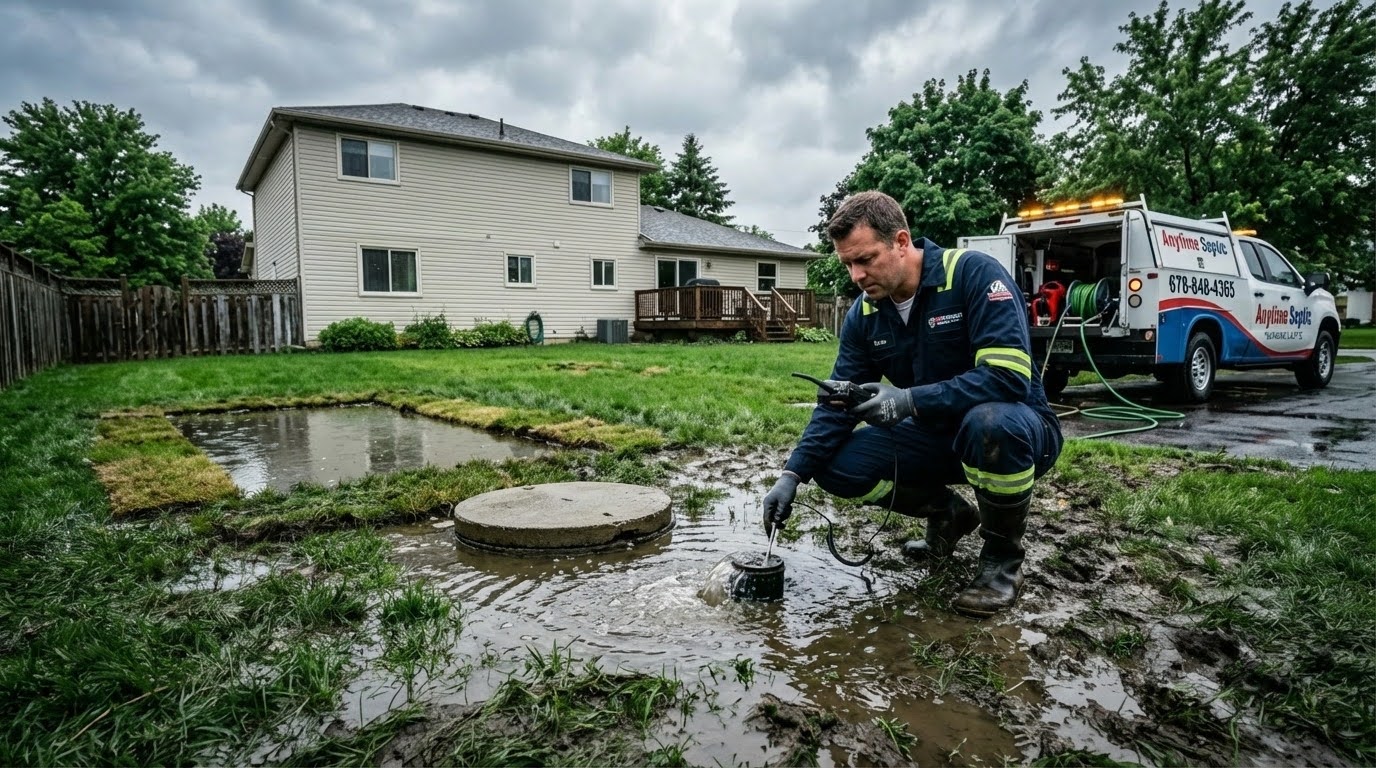

The Drain Field Clogs and Fails
A clogged drain field is one of the most expensive septic problems you can face. We’re talking $5,000 to $15,000 or more for a full drain field repair or replacement. Compare that to a few hundred dollars for a routine pump-out, and the math is pretty clear.
We’ve pulled up drain field lines on properties in Dallas and Cartersville that were completely packed with sludge because the homeowner went 10 or 12 years without pumping. That’s not a repair. That’s a replacement. And the yard gets torn up in the process.
A regular pump-out is the cheapest insurance you can buy for your septic system. Don’t skip it

Do Septic Additives Like Rid-X Change the Schedule?
We get this question a lot. Homeowners want to know if adding a product like Rid-X to their tank means they can go longer between pump-outs.
The short answer: no, not really. Additives can help maintain healthy bacteria levels in your tank, and there are situations where they make sense. But they don’t replace pumping. No additive on the market can break down the inorganic solids, grease buildup, and heavy sludge that accumulates over time. That stuff has to be physically pumped out.We wrote a full breakdown on the pros and cons of Rid-X if you want to dig deeper into what these products can and can’t do. The bottom line is that additives are a supplement, not a substitute.

How to Keep Track of Your Pumping Schedule
Keeping track of your septic maintenance doesn’t have to be complicated. Here are a few simple ways to stay on top of it.
Keep Records
Every time your tank is pumped, save the receipt or service report. Write down the date, the company that did the work, and any notes about the condition of the tank. A folder in a desk drawer works fine. So does a note in your phone. The point is having a record you can look back on.
If you ever sell your home, having septic maintenance records is a big plus. Buyers and home inspectors in Bartow and Paulding County want to see proof that the system has been maintained.

Set Reminders
Once you know your pumping interval, set a reminder on your phone or calendar for 6 months before the next pump-out is due. That gives you time to schedule the service without rushing or waiting until something goes wrong.
Ask Your Pumping Company for a Maintenance Plan
A good septic tank pumping service will keep records of your pump-outs and remind you when you’re due. That’s what we do for our customers. When you’re in our system, we know your tank size, your household details, and your pumping history. We’ll reach out and let you know it’s time.


