Why Rome and Floyd County Properties Are Prone to Septic Issues
Floyd County has a few things working against septic systems that other parts of the state don’t deal with as much.
Older systems. Many homes in Rome still rely on septic systems installed in the 1970s through 1990s. A concrete tank that went into the ground 40 years ago has taken a lot of wear, and the standards back then were less strict than what’s required today.
Heavy red clay soil. This is the big one. Floyd County sits on red clay that holds water instead of letting it drain. Clay compacts over time and reduces the drain field’s ability to absorb effluent. A system that worked fine for 15 years can start failing simply because the clay underneath has tightened up.
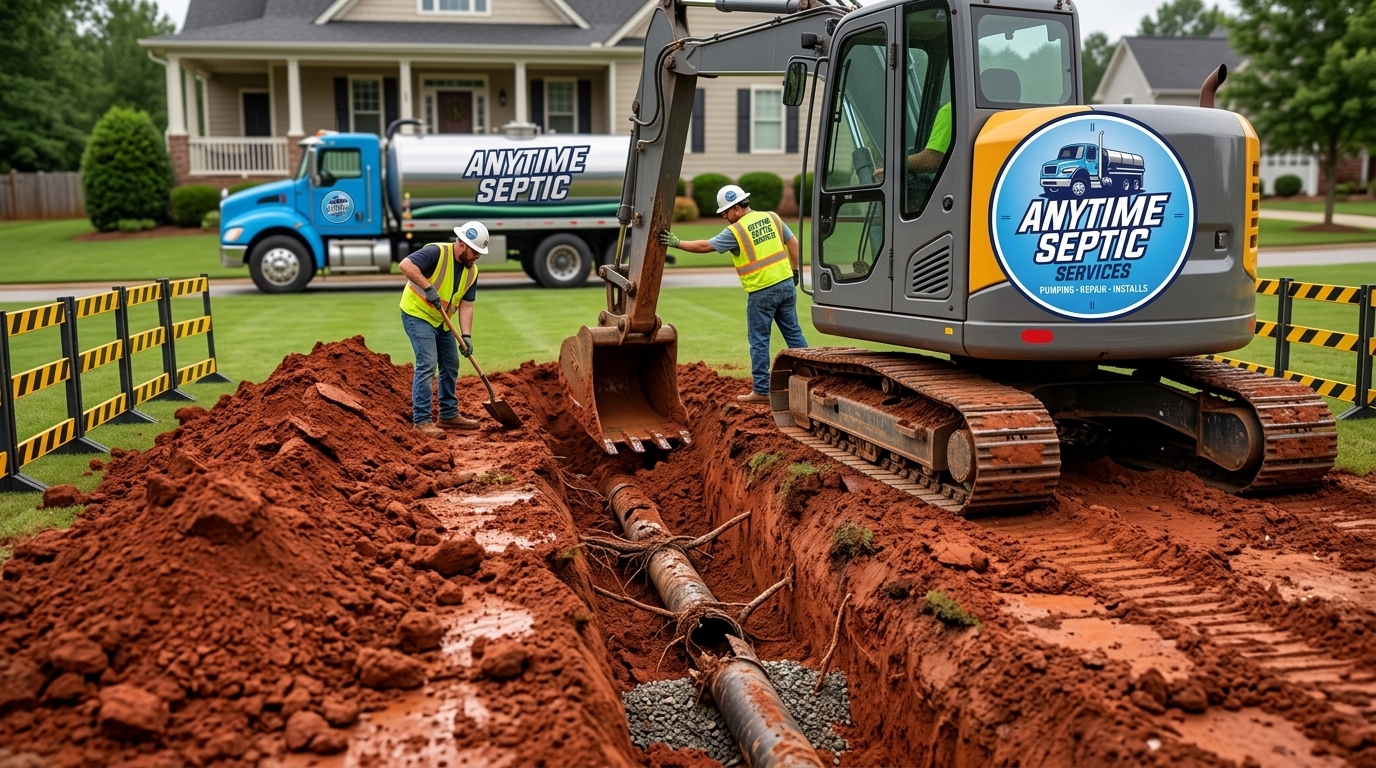
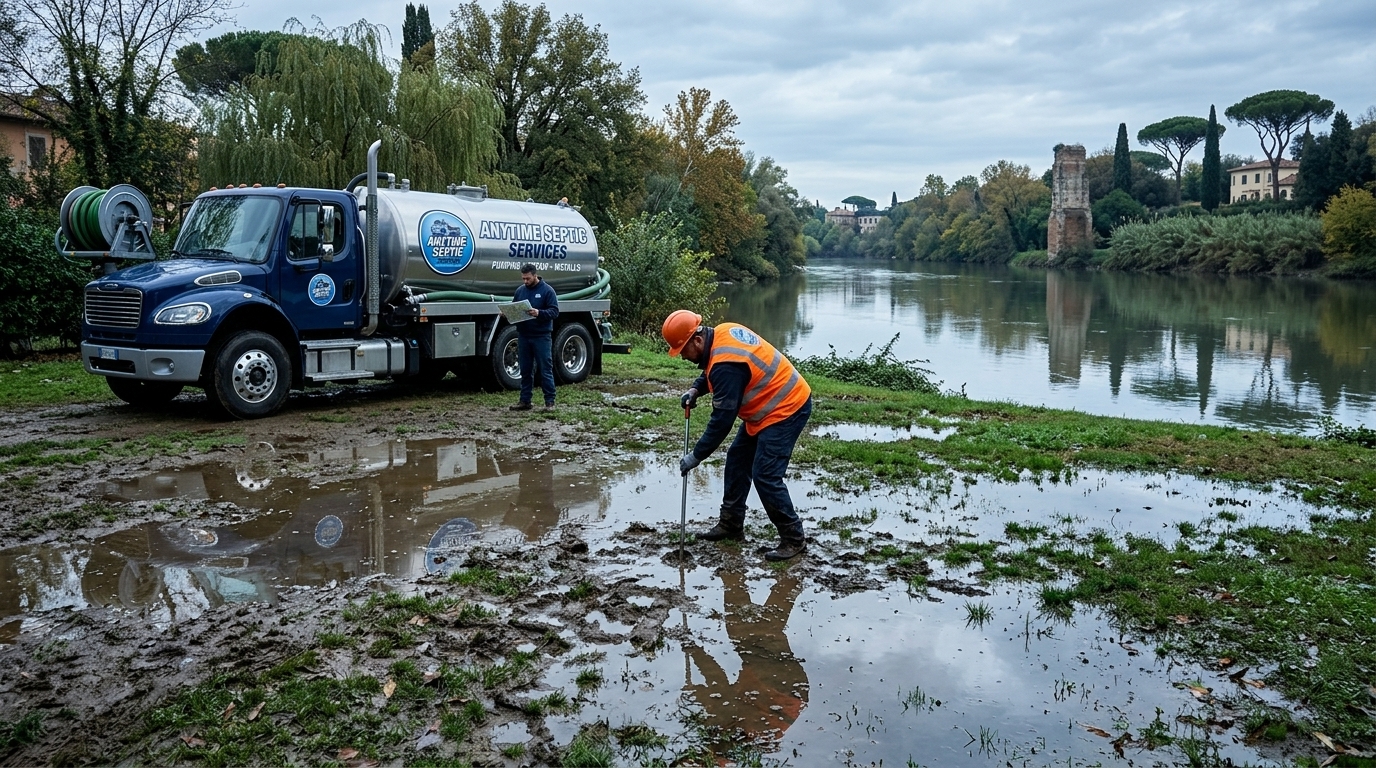
River valley water tables. Rome sits at the confluence of the Etowah and Oostanaula rivers. Properties along those river corridors deal with higher water tables, especially in spring and after heavy rain. When the water table rises, the drain field has less capacity to do its job.
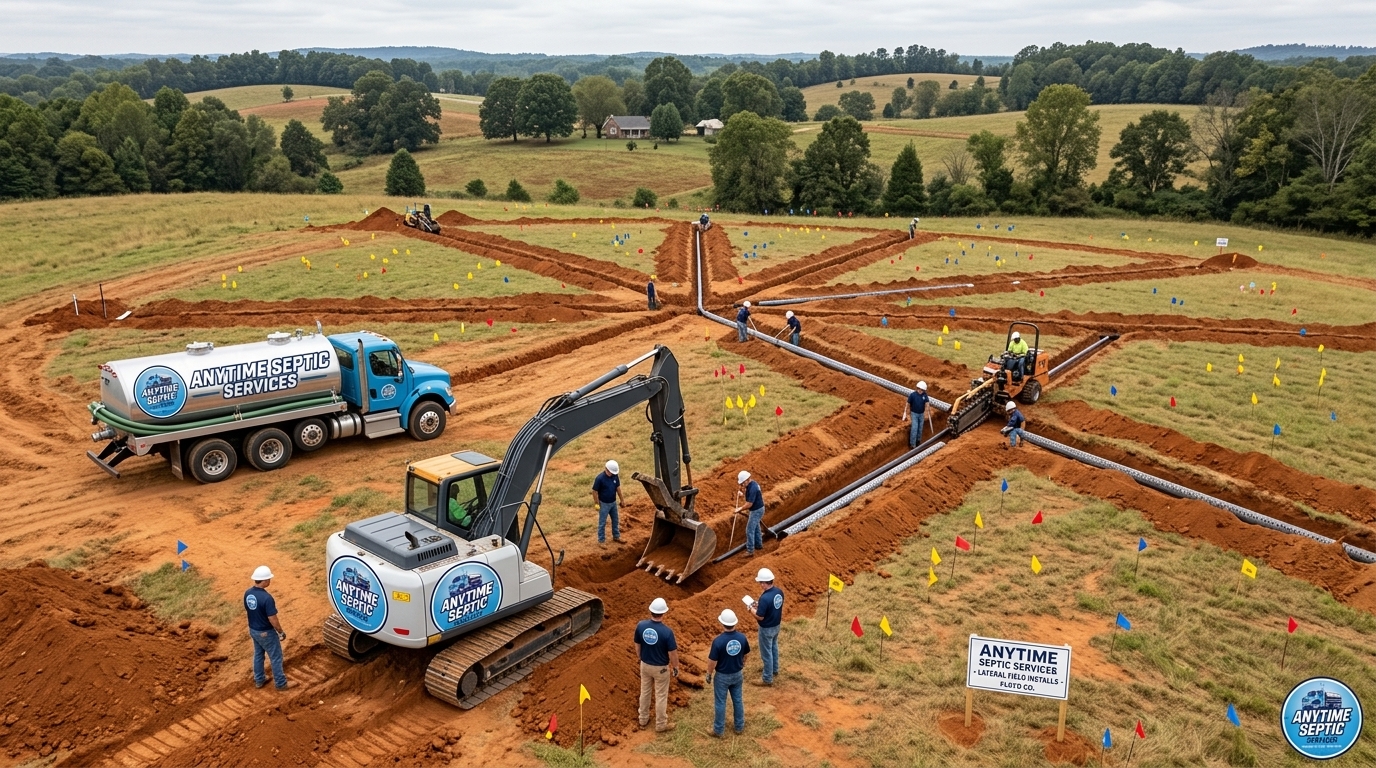
Rural lots with long lateral lines. Many Floyd County properties have drain field lines that run 100 feet or more from the tank. More pipe means more connections and more places for things to go wrong.
Rocky terrain. Some areas around Rome have shallow bedrock that limits how deep a drain field can be installed. Shallow systems are more vulnerable to surface water and compaction from above.

The 6 Most Common Septic Problems We See in Rome
1. Drain Field Failure From Clay Soil Compaction
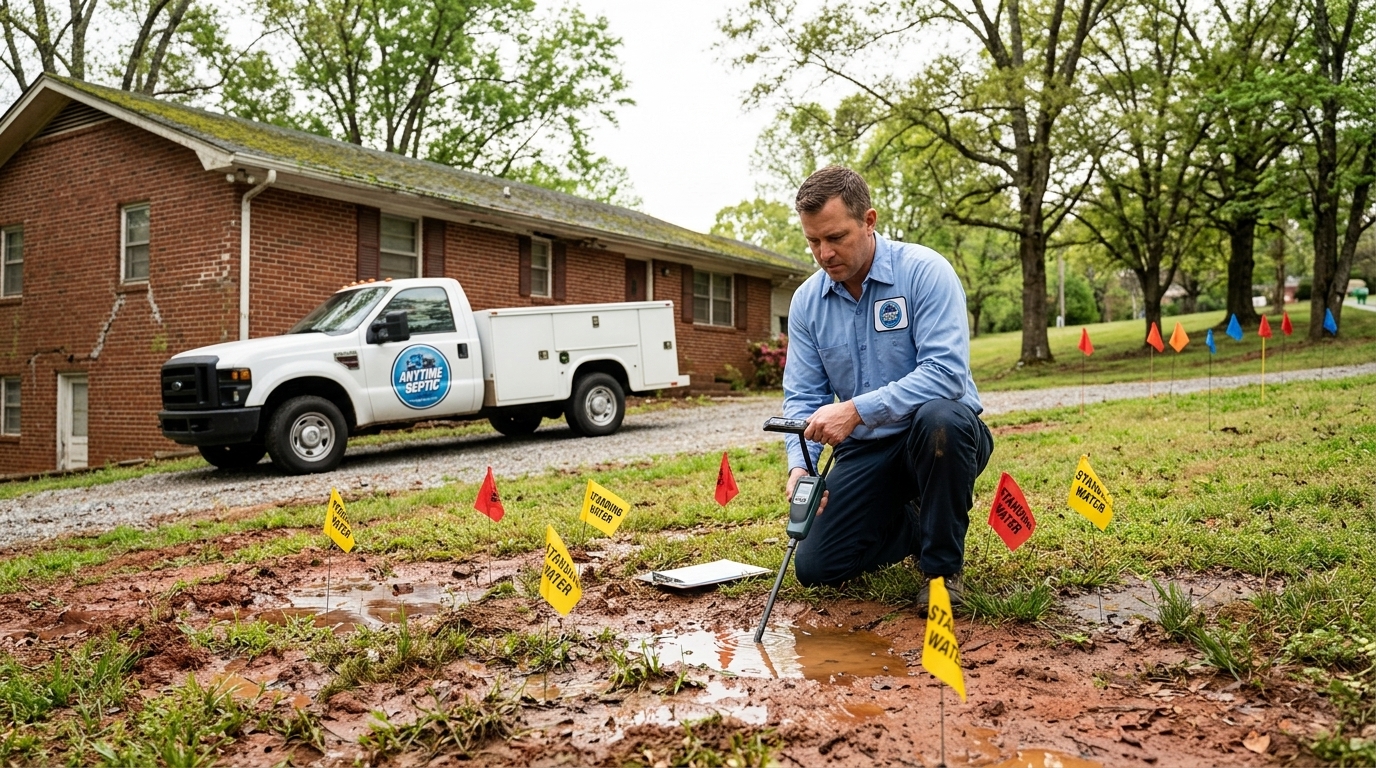
This is the problem we deal with most in Floyd County. The clay soil under the drain field packs down over the years until it stops absorbing effluent. Wastewater backs up, rises to the surface, and you end up with soggy spots or standing water in the yard.
If you notice wet ground over your drain field that doesn’t dry out, or grass that’s noticeably greener in one strip, those are signs your drain field is failing. Clay compaction is often the cause, especially on Rome-area properties where the soil was marginal for drainage from the start.
2. Tree Root Intrusion
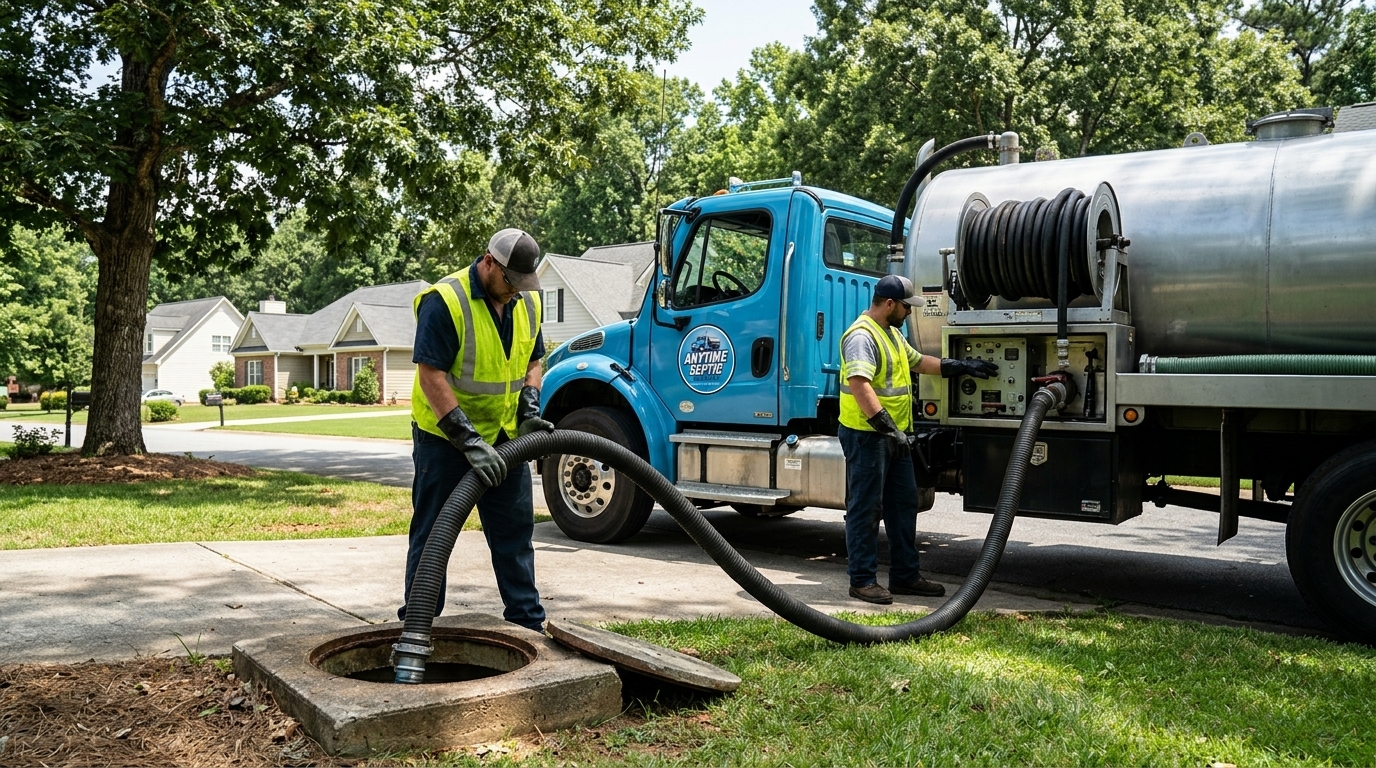
Floyd County is full of mature oaks, pines, and sweetgums. Those trees send out aggressive root systems that seek moisture and nutrients. Roots can crack tank walls, push through pipe joints, and grow into drain field lines until the whole system is choked.
We see root problems most on older Rome properties where large trees have had 30 or 40 years to spread. Sweetgums are some of the worst offenders. If you have big trees within 30 to 50 feet of your system, roots are always a concern.
3. Tank Damage From Age
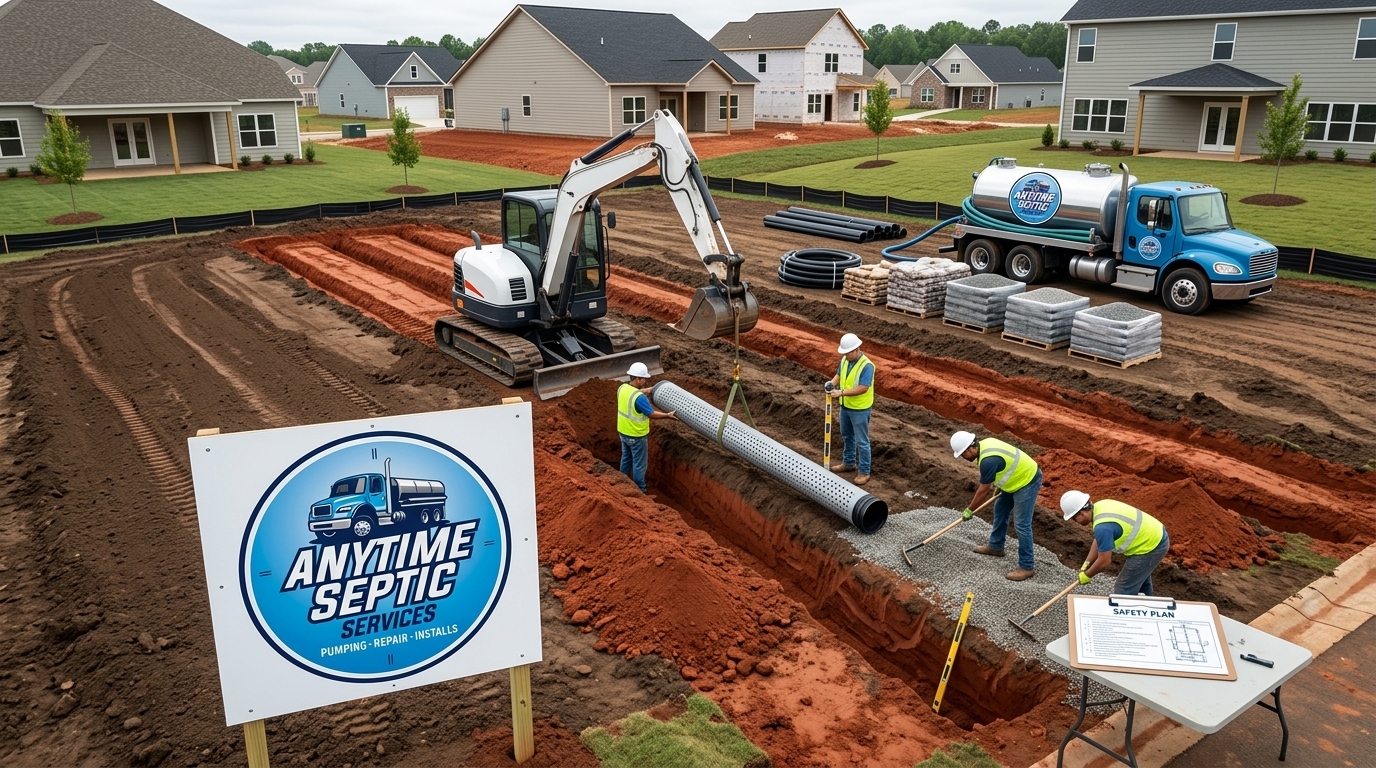
A concrete tank installed in 1980 has been sitting in acidic Georgia soil for over 45 years. We find tanks with hairline cracks, chunks missing from the walls, and lids that are unsafe to stand on. Cracked tanks let groundwater seep in (overloading the system) or let wastewater leak out before it’s been treated. Either way, everything downstream suffers.
4. Baffle Failure
Baffles inside the tank control water flow and keep solids from escaping to the drain field. Most older Rome-area tanks have concrete baffles, and they break down over time. When the outlet baffle fails, solids flow straight into the drain field and clog the lines. When the inlet baffle fails, incoming water stirs up settled solids instead of entering smoothly. Both lead to bigger problems if not caught early.
5. System Overload
Many Rome homes have been added onto since the original system was installed. A 1,000-gallon tank sized for a three-bedroom house in 1985 might now serve a home with an extra bathroom, a finished basement, and two more people. The extra water volume exceeds what the system can handle, and the drain field can’t keep up. The result is premature failure, frequent backups, and the need for constant pumping just to stay functional.
6. Flooding and High Water Table Issues
Properties near the Etowah and Oostanaula rivers deal with seasonal flooding and fluctuating water tables. When the ground is saturated, the drain field has nowhere to send the effluent. The system stalls until conditions improve.
We see this most during late winter and early spring. Homes along the river corridors south and west of Rome get hit the hardest. If your property stays saturated for days after a big rain, your system is under more stress than one on higher ground.
When to Repair vs. Replace
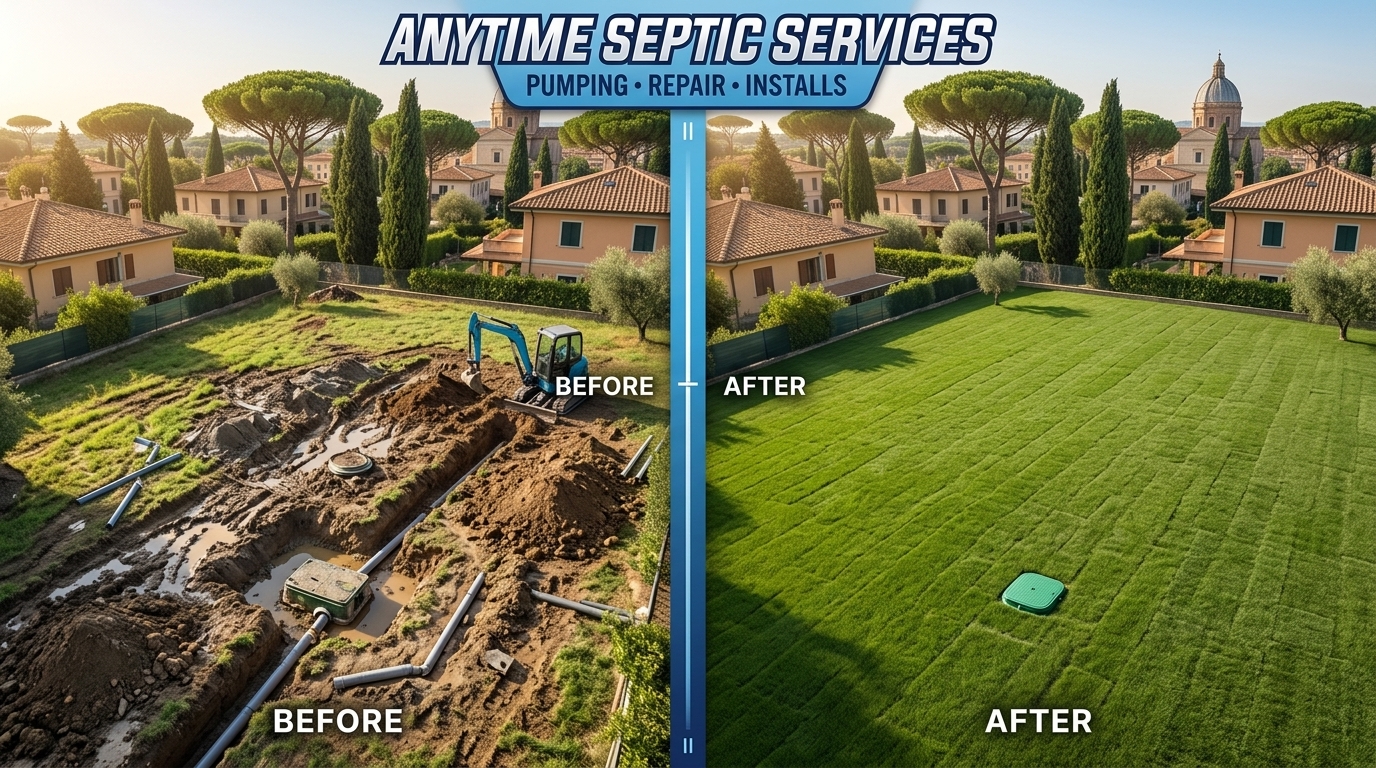
Repair usually works when:
- A single section of drain field pipe is damaged or root-clogged
- Baffles have failed but the tank is structurally sound
- A minor tank crack can be sealed
- The system is overloaded but can be brought into balance with usage changes and pumping
Replacement is usually necessary when:
- The drain field soil is fully compacted beyond recovery
- The tank has major structural failure
- The system is undersized and can’t be modified
- Multiple components have failed at the same time
We always assess the full situation before recommending one over the other. A $1,500 repair is only worth doing if it actually solves the problem.
What Common Repairs Cost in the Rome Area
Costs vary by scope, site conditions, and county requirements. Here are rough ranges for the work we handle most.
- Baffle repair or replacement: $300 to $900
- Tank lid replacement: $200 to $500
- Minor tank crack repair: $500 to $1,500
- Partial drain field line repair: $1,500 to $3,500
- Full drain field replacement: $5,000 to $15,000+
- Complete system replacement (tank and field): $10,000 to $20,000+
We provide a written estimate before any work starts so you know exactly what to expect.
Areas Where We See Specific Problems Most
Over the years, patterns show up. Properties along the river corridors near the Oostanaula and Etowah deal with water table and flooding issues more than anywhere else in the county. The older neighborhoods closer to downtown Rome have the most aging tanks and baffle failures because those homes were built in the 1960s and 1970s.
Out on the edges of the county, larger rural properties have longer lateral lines and more root exposure. And the hillside properties in northern Floyd County are where we find shallow systems struggling with rocky terrain.
No matter where your property sits in the Rome service area, catching a problem early gives you more options and saves you money.