
How Your Septic System Works (And Why It Fails in Cartersville)
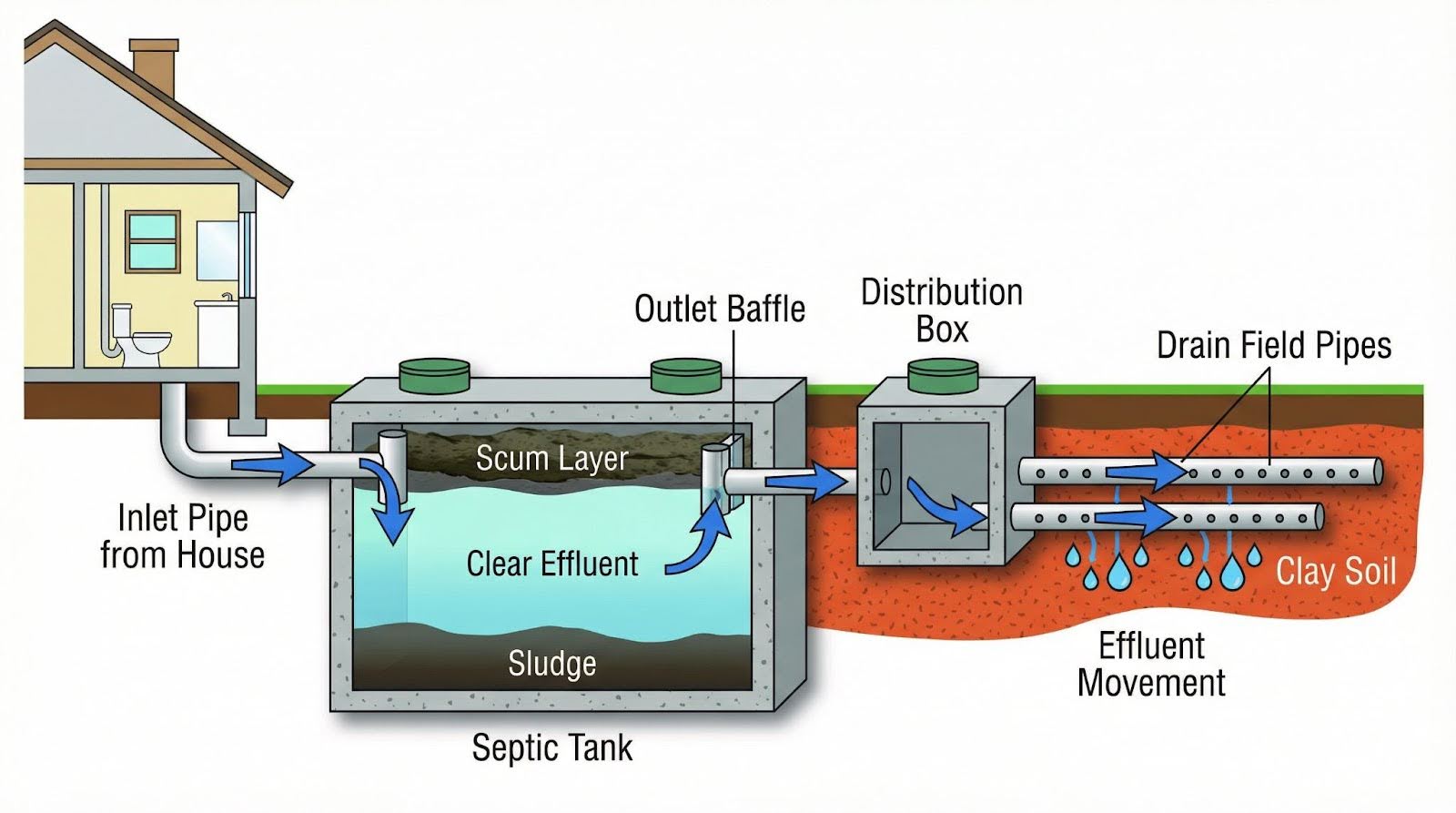
Understanding why slow drains happen requires knowing how your septic system processes wastewater and why Cartersville’s unique conditions make failure more likely.
When wastewater leaves your home, it flows into your septic tank where solids settle to the bottom (forming sludge) and grease floats to the top (forming scum). The partially treated liquid in the middle called effluent flows out to your drain field, a network of underground pipes that releases wastewater into the soil for final natural treatment.
Here’s where Cartersville’s clay soil creates problems: Georgia is famous for our red clay, but it’s not only impossible to wash out of your laundry, it makes percolation difficult. The drain field depends on wastewater percolating down through soil layers where beneficial bacteria complete treatment before water reaches groundwater. Clay soil’s tightly compacted particles prevent this percolation water gets trapped instead of filtering through.

When your drain field can’t accept wastewater outflow from the tank, the entire system backs up. This backup pressure slows or stops water leaving your home through drains. Your fixtures feel clogged, but the actual problem is 50+ feet underground where your drain field is saturated in clay-trapped effluent.
Single Drain vs. Multiple Drains: Critical Diagnosis
The location and pattern of slow drainage tells you almost everything about whether you’re dealing with a simple plumbing clog or a septic system failure.
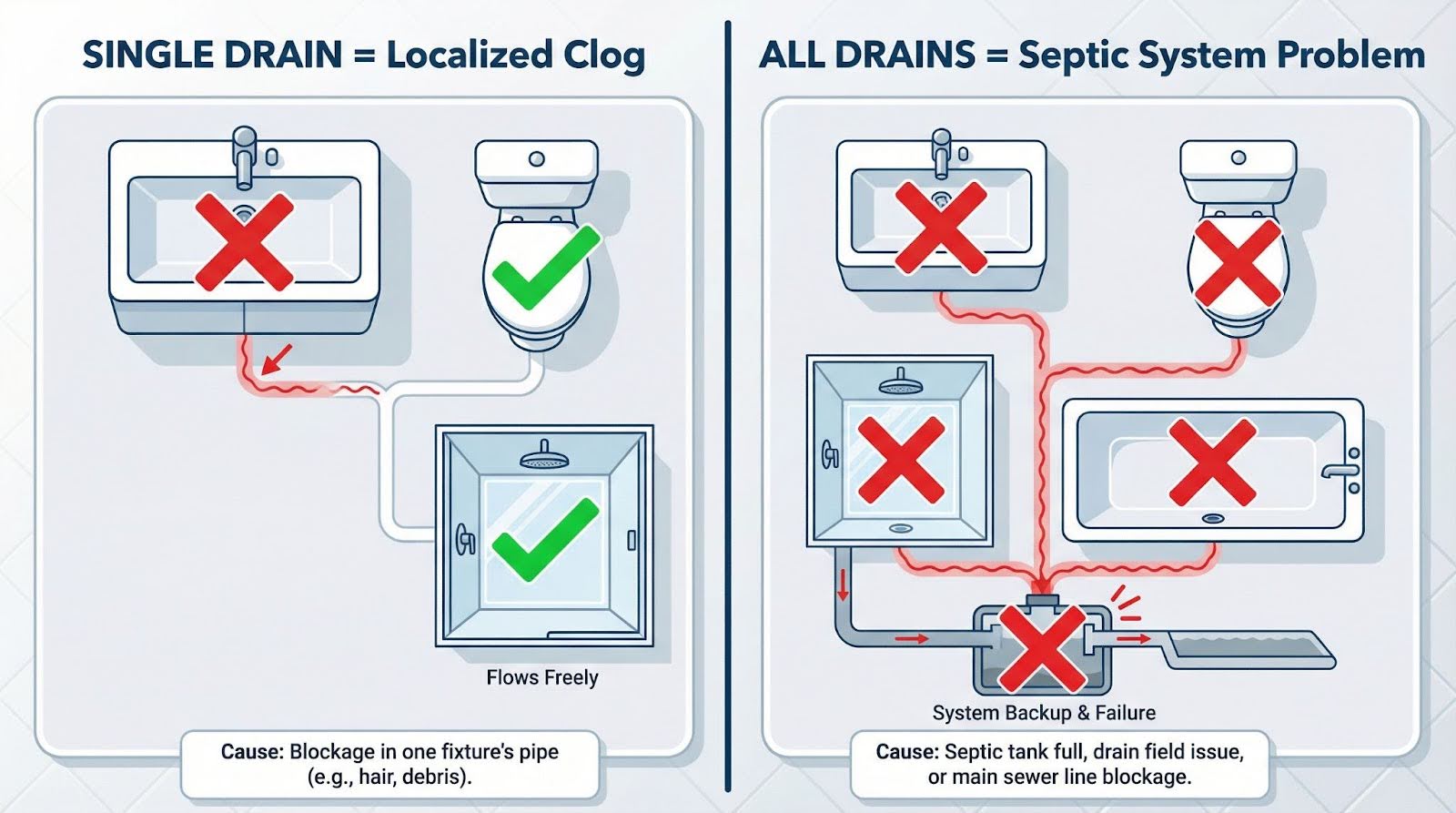
Single Drain Running Slowly
If only one fixture a bathroom sink, shower, or toilet drains slowly while others work normally, you likely have a localized plumbing clog. Hair, soap scum, grease, and debris accumulate in that specific drain line, restricting water flow. These clogs are easily resolved through home remedies or a plumber’s visit and rarely indicate septic problems.
Safe DIY fixes for single slow drains:
- Hot water flush: Pour 120-140°F water down the drain in stages to dissolve grease and soap scum
- Baking soda and vinegar: Mix ½ cup each, let fizz for 30 minutes, then flush with hot water (completely septic-safe)
- Drain snake: Pull hair and debris from the first few inches of the drain
Never use chemical drain cleaners, they kill beneficial septic bacteria and create larger blockages downstream. Ask us about our enzymes the next time you schedule septic services.
All Drains Running Slowly Simultaneously
When your shower, sinks, toilets, and laundry drain are all draining slowly at the same time, you’re dealing with a system-wide septic issue. Water cannot flow freely to the septic tank, or wastewater cannot exit the tank into the drain field. This demands a professional septic inspection immediately.
The Real Problem: Cartersville’s Clay Soil and Drain Field Saturation
Slow drains throughout your Cartersville home most commonly result from a saturated or failing drain field, a problem directly caused by Bartow County’s soil composition and an aging septic system.
Why Does Georgia Red Clay Create Septic Problems
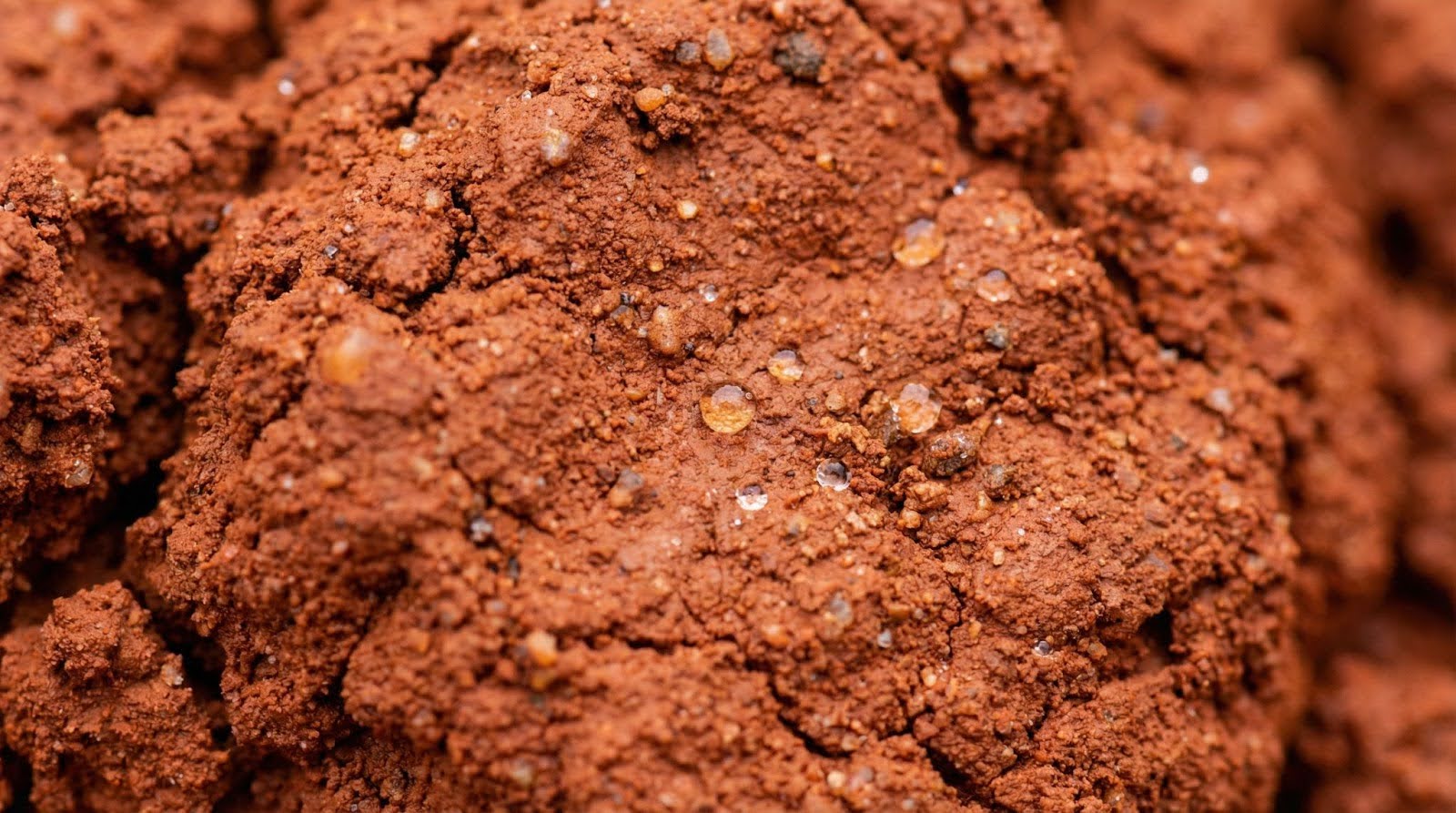
Bartow County’s soil is dominated by clay specifically the Townley-Fullerton-Montevallo association characterized by slowly permeable, clay-rich material. This geological reality creates a fundamental challenge for septic systems.
Clay soil particles are tightly compacted with minimal space between them. Water molecules bond to clay’s mineral structure and sit in place, unable to pass through. Cartersville’s clay soils typically achieve percolation rates of less than 1 inch per hour, far below the minimum rates needed for proper septic drain field performance.
Instead of percolating downward as designed, treated wastewater from your septic tank either:
- Pools in the drain field, saturating surrounding soil
- Backs up into the septic tank, preventing new wastewater from entering
- Surfaces in your yard as soggy patches or foul-smelling wet spots over the drain field area
When the drain field can’t absorb wastewater, the entire system backs up into your home’s plumbing.
Cartersville’s Climate Makes It Worse
Cartersville receives approximately 50 inches of annual precipitation significantly above the U.S. average of 38 inches. This above-average rainfall continuously saturates clay soil, reducing its already-limited ability to absorb septic effluent.
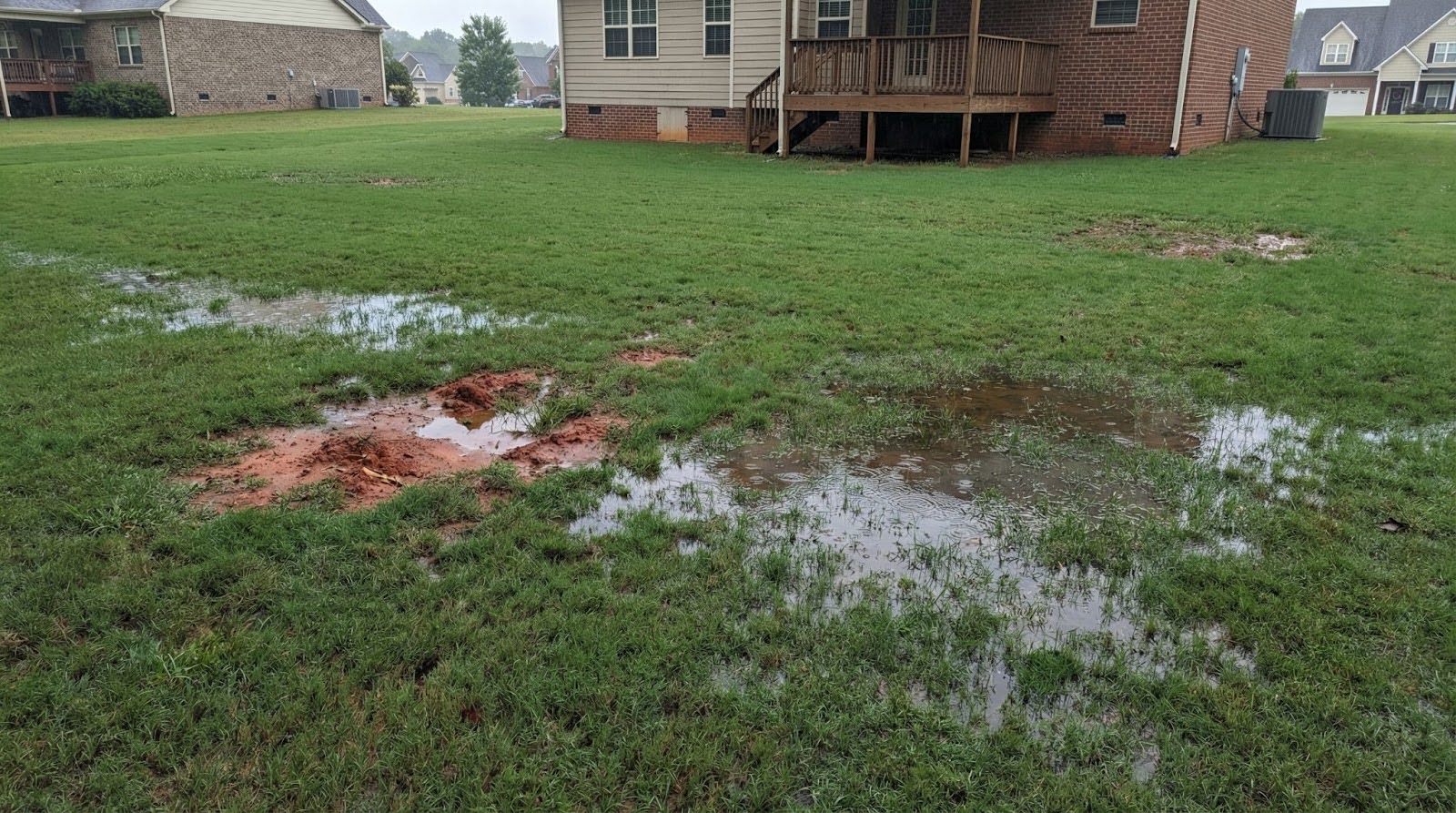
During spring’s heavy rainy season (March averages 4.6+ inches of rain), drain fields in clay soil become completely overwhelmed. Additionally, Cartersville’s high seasonal water table competes directly with your drain field for absorption capacity. When groundwater rises during wet periods, it essentially drowns your drain field, making absorption impossible.
The result: Slow drains in Cartersville aren’t coincidental, they’re predictable consequences of local soil and climate conditions.
Red Flags: When to Call a Professional Septic Company Immediately

Contact Anytime Septic immediately if you experience:
- All drains running slowly simultaneously throughout your home
- Gurgling sounds in your plumbing system when flushing toilets or running water
- Foul sewage odors near drains, toilets, or in your yard
- Toilets struggling to flush or constantly backing up
- Standing water or soggy patches in your yard, especially over the drain field area
- Sewage backing up into toilets, sinks, or bathtubs
These symptoms indicate your septic system, not your plumbing, needs expert evaluation. In Cartersville’s clay soil environment, drain field problems progress rapidly. What starts as slow drains can become complete sewage backup within weeks if ignored.
The Cost of Ignoring Slow Drains

Slow drains seem like minor inconveniences, but they’re your septic system’s first warning signal before catastrophic failure. The financial impact of delayed action escalates quickly:
- Early attention: Septic tank pumping ($300-$500) often resolves the issue
- Delayed attention: Drain field repairs ($2,000-$10,000)
- Ignored symptoms: Complete septic system replacement ($10,000-$30,000)
Anytime Septic has served Bartow County homeowners for years, and we’ve seen how proactive response to slow drains prevents exponentially higher costs. Early diagnosis and maintenance protect your investment and prevent emergency situations.
Cartersville Specific Septic Maintenance
Given Cartersville’s clay soil and above-average rainfall, standard septic maintenance guidelines don’t apply. Protect your system with regular maintenance and these tips.
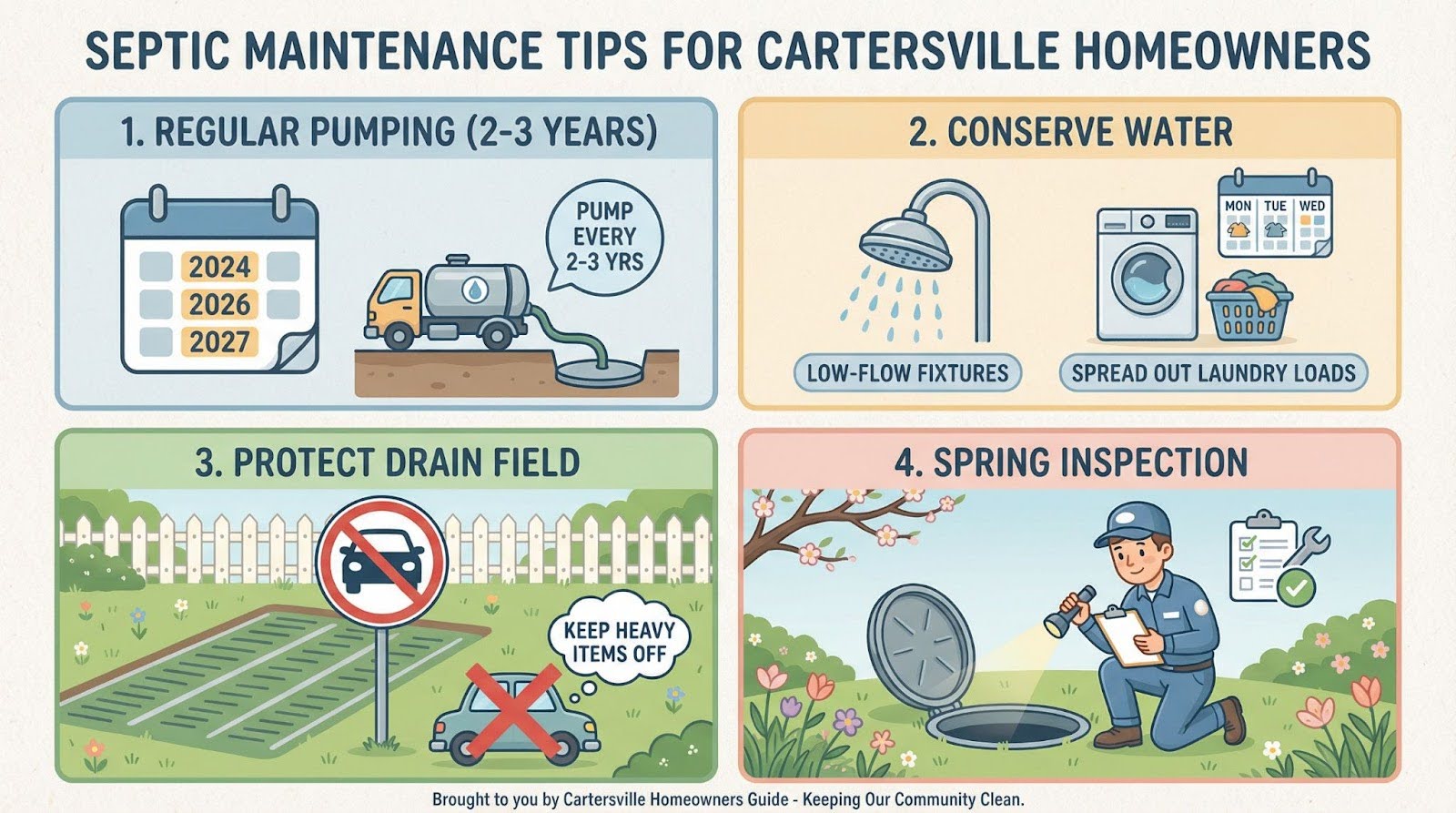
Septic Pumping More Frequently: Every 2-3 years instead of the standard 3-5 year schedule. Clay soil causes faster sludge accumulation and reduced drain field absorption capacity. Regular septic services will save you money in the long run.
Conserve Water: Spread laundry loads across the week instead of doing multiple loads in one day. Take shorter showers, fix leaks immediately, and install low-flow fixtures. Your clay-surrounded drain field cannot absorb as much water as systems in sandy soil.
Protect the Drain Field: Never park vehicles or allow heavy equipment over your septic tank or drain field. Direct downspouts and surface water 10-15 feet away from the system. Clay soil compaction from heavy loads accelerates drain field failure.
Schedule Spring Inspections: Before heavy spring rainfall saturates clay soil, have your system professionally inspected. Early detection prevents drain field failure during peak rain season.
Conclusion: Take Action Before Slow Drains Become Sewage Backups
Slow drains in your Cartersville home aren’t just annoying, they’re diagnostic messages from your septic system signaling that something is wrong. In Bartow County’s clay soil environment, they often indicate drain field saturation or tank capacity issues that won’t resolve without professional intervention.
The good news: early diagnosis prevents expensive system failure.
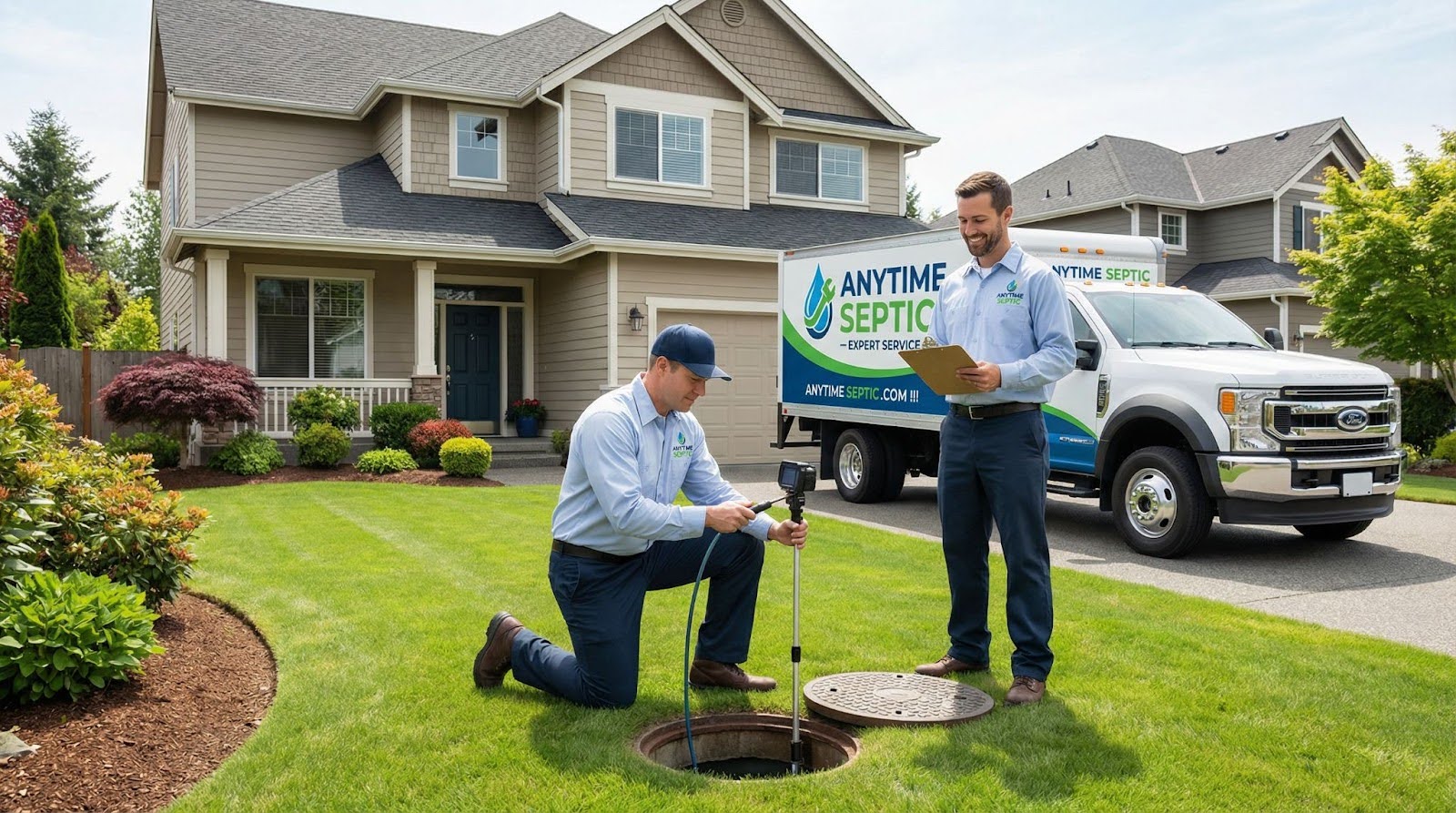
Experiencing slow drains throughout your Cartersville home? Contact Anytime Septic for a professional system evaluation. Our certified technicians understand Bartow County’s unique clay soil challenges and can diagnose whether you’re dealing with a plumbing clog or septic system failure. We’re family-owned and operated by brothers Toby and Jason Evans, offering honest, upfront pricing with same-day service often available.
We’ll recommend the right solution from routine septic pumping to drain field repair before slow drains become sewage backups.
Call (678) 848-4365 or schedule your inspection online today.


