678-848-4365
service@anytime-septic.com
Business Hours Mon - Sun | Open 24 Hours

How To Tell If Your Septic Tank Needs Pumping

Your septic tank is one of those things you probably don’t think about until something goes wrong. It works silently underground, handling all the household wastewater from your home every single day. But like any system, it needs regular pumping to keep running smoothly. This guide explains the warning signs that your tank should be pumped and what you can do to avoid costly repairs.

Understanding Your Septic System

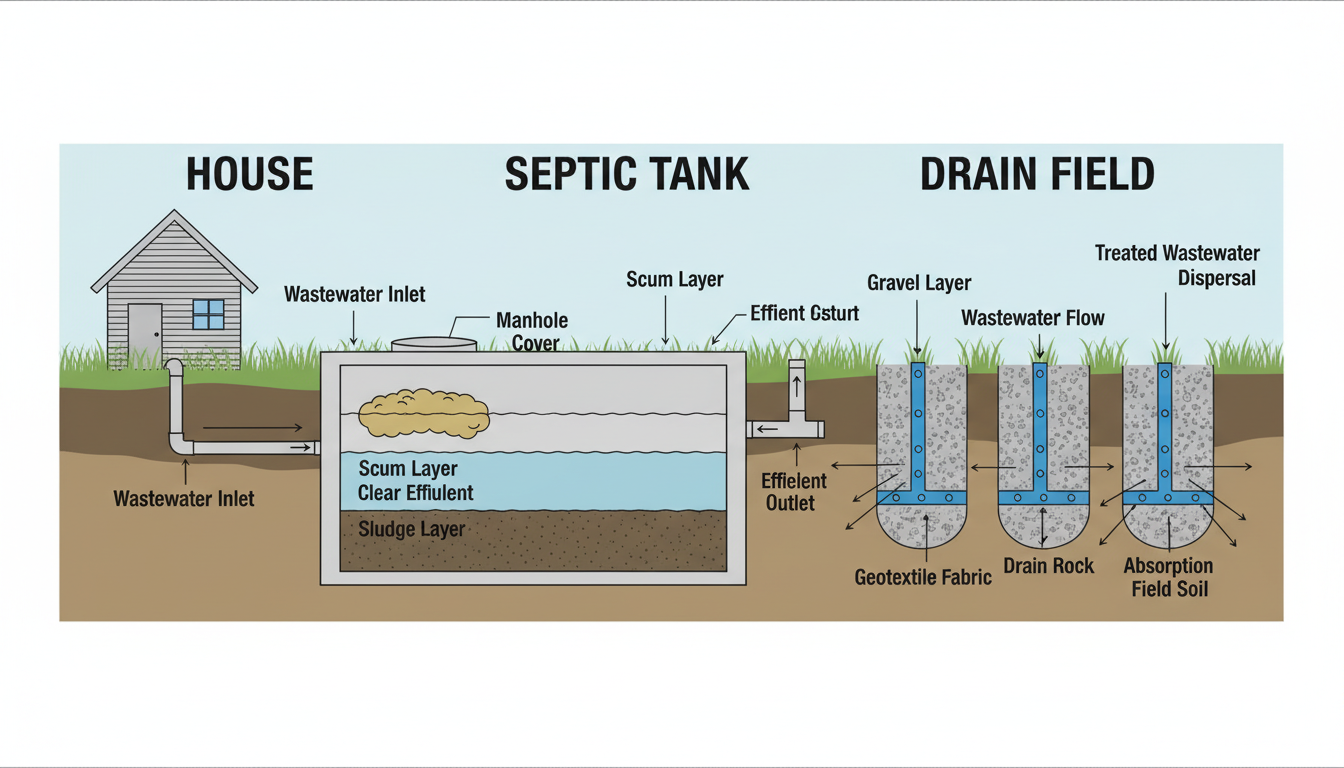
A septic system is a self-contained wastewater treatment setup for homes not connected to a city sewer line. When water leaves your toilet, sink, shower, or washing machine, it flows into your underground septic tank.

Inside the tank, something important happens. Wastewater separates into three layers. Heavy solids sink to the bottom as sludge. Grease and oils float to the top as scum. The clear liquid in the middle, called effluent, flows out to your drain field where soil naturally filters it. This is how your septic system works to treat wastewater before it enters the groundwater.

Over time, the sludge layer builds up on the tank bottom. When this layer gets too thick, it starts flowing into your drain field and clogs the soil. That’s why septic tank pumping matters. Regular pumping removes accumulated sludge and prevents system failure. Without it, you’re looking at expensive repairs or complete system replacement.

Key Signs Your Septic Tank Needs Pumping

Indoor Warning Signs

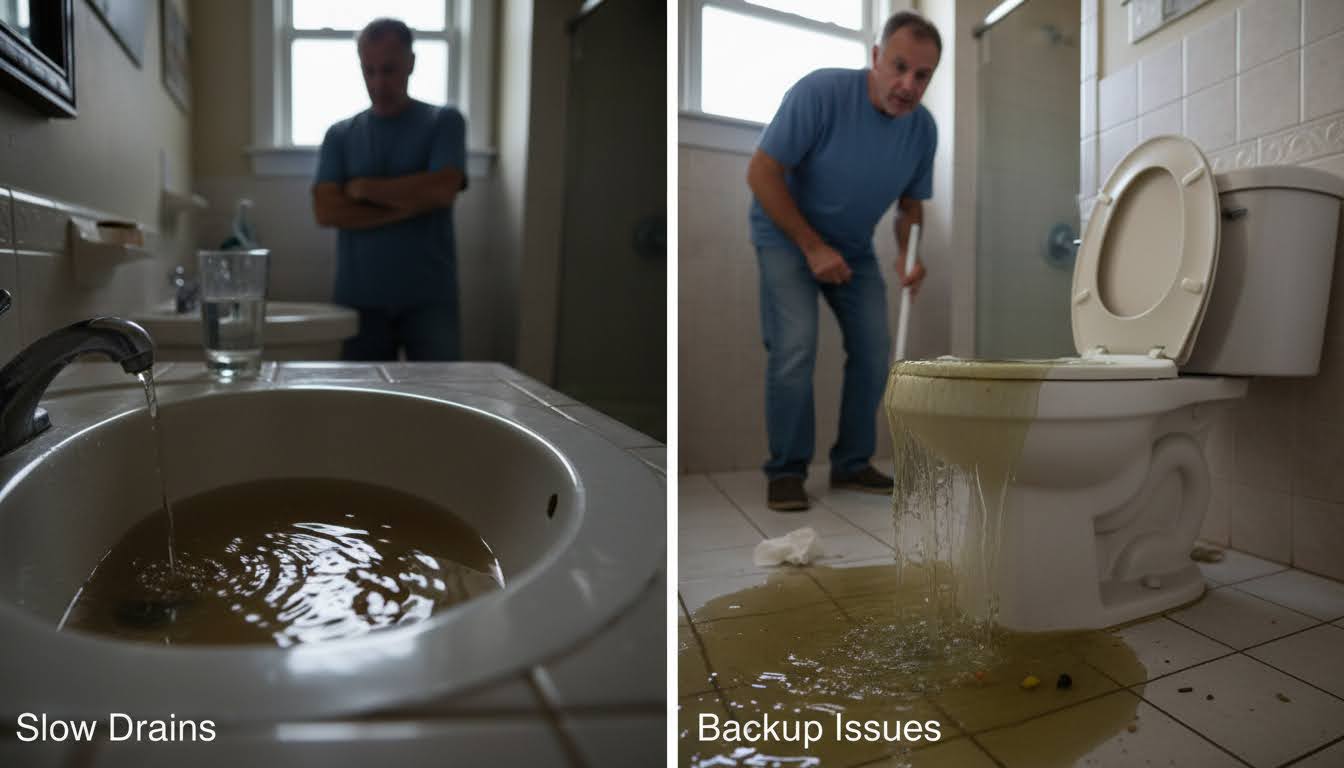
Slow drains are often the first clue something’s wrong. If water backs up in your toilet, tub, or sink, your septic tank needs attention. Pay special attention to the lowest fixtures in your home, like basement bathrooms or laundry areas. These fill first when the tank reaches capacity.

If multiple drains are moving slowly at the same time, that’s a tank problem, not a single clogged pipe. One slow drain in an upstairs bathroom might just be a hair clog. But when everything in the house drains slowly, your septic tank is likely the issue. You may notice toilet paper or other debris not flushing properly.

Outdoor Yard Warning Signs

Check the area around your septic tank and drain field for pooling water or unusually wet spots. If the ground is soggy or you see standing water without recent rainfall, effluent is surfacing. This means your tank is full and can’t drain properly into the drain field. Surface water pooling indicates a serious problem that needs immediate attention.

You might also notice patches of extra green grass or, in some cases, dead grass over the tank area. These changes happen because wastewater is seeping up to the surface. Walk around your property regularly and get familiar with how it normally looks.

Smell Problems

Strong foul odors around your yard are a clear sign of trouble. If you detect sewage smells near the tank, cleanout, or drain field, your septic tank pumping is overdue. Unpleasant smells inside your house, especially in bathrooms or laundry areas, can also indicate backup issues.

Checking Your Septic Tank Yourself

You don’t need to open your tank to assess its condition. Opening a septic tank is dangerous because toxic gases accumulate inside. Never go near an open tank or attempt to enter it.

Instead, use a simple sludge judge tool. This is a white plastic tube about four feet long that you can order online or rent from a pump company. Lower it through the access opening into the tank. The tube fills with material from different layers.

When you pull it out, you can see the scum layer floating on top. Measure how thick this grease layer is. If it’s more than six inches, your tank should be pumped soon. At the bottom of the tube, look at the dark sludge and measure the sludge level. If this layer exceeds 12 inches, schedule pumping right away.
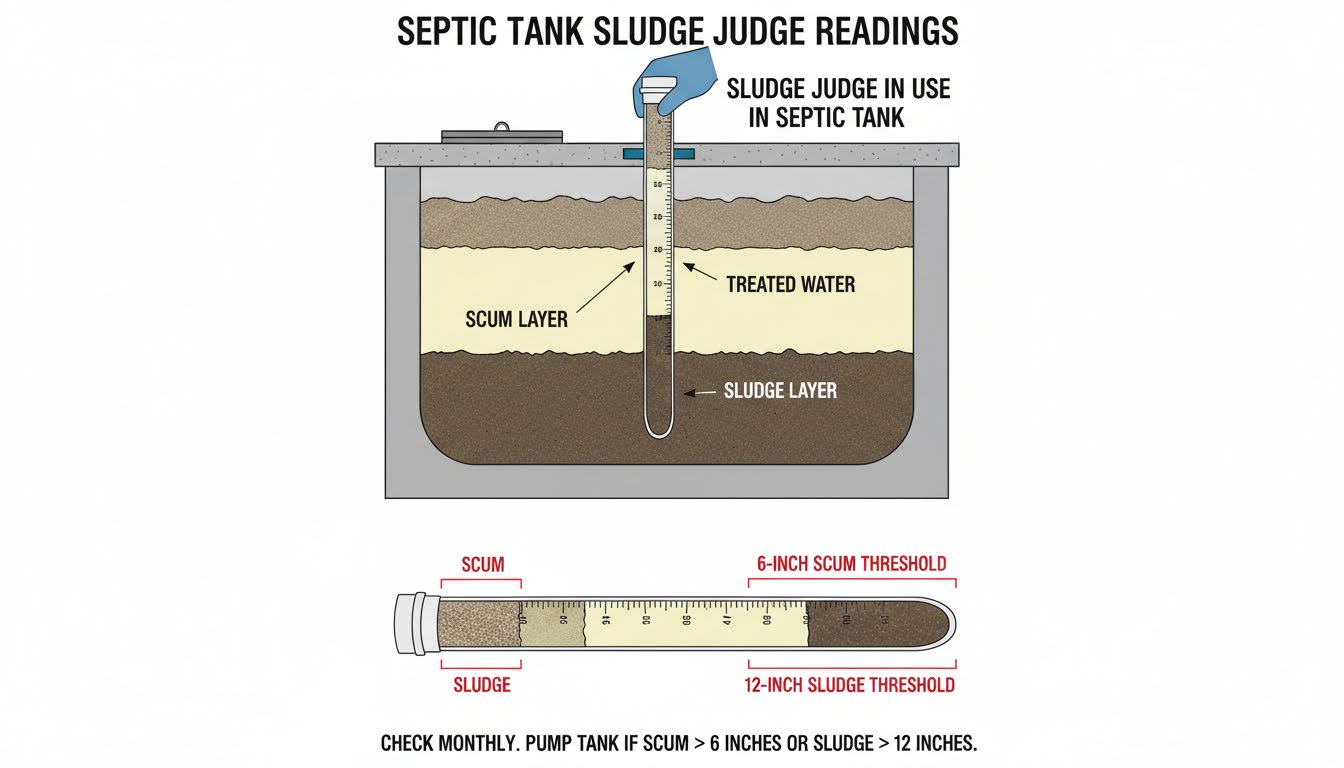
Keep records of your measurements. Write down the date, sludge depth, and scum thickness each time you check. This data helps you understand how fast your tank fills and predict when the next pumping is needed.

How Often Should You Pump Your Septic Tank

The general rule is pumping every three to five years. But your home might need more or less frequent septic tank maintenance depending on several factors.

Household size makes a big difference. More people means more wastewater and faster tank filling. A family of six will fill a tank faster than a couple living alone.

Tank size also matters. A larger tank fills more slowly than a smaller one.

Water usage affects how quickly sludge builds up. Long showers, frequent laundry, or multiple loads running daily speed up the process. Leaking toilets waste thousands of gallons and fill your tank faster. Even small drips can waste hundreds of gallons monthly. Water-saving habits extend the time between pumpings.

What you flush changes everything. Garbage disposal use adds food waste that doesn’t fully break down. This material settles in your tank as extra sludge. Homes without garbage disposals have slower sludge buildup.

Never flush anything except human waste and toilet paper. Diapers, wipes, feminine products, paper towels, coffee grounds, and dental floss destroy the system. These items don’t decompose and create clogs that force early pumping or system failure.

Work with a service provider to establish your home’s schedule. They can inspect your system and estimate how often you personally need service. A household of two with a 1,500-gallon tank might pump every four to five years. A family of six with the same tank might need septic tank pumping every two years.

Common Problems That Lead to Failing Septic System

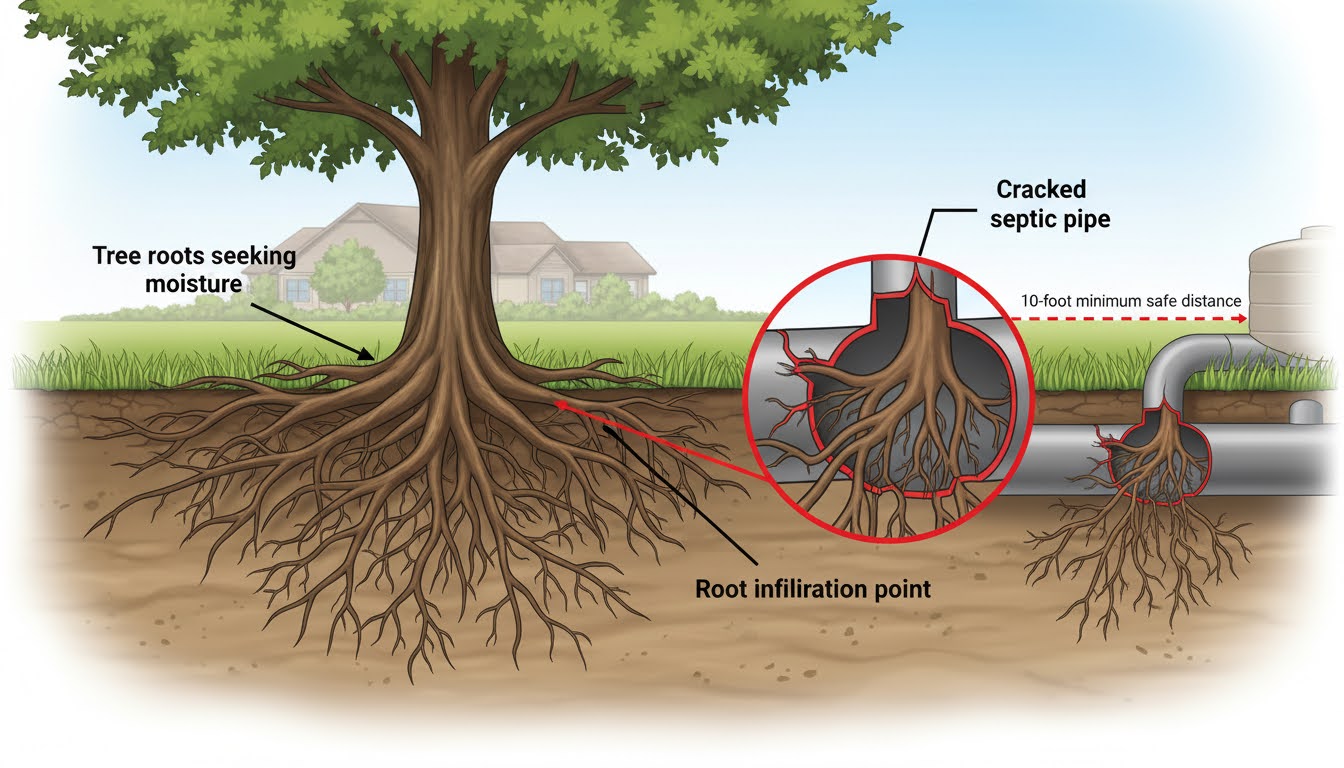
Tree roots seek moisture and can crack septic pipes. Large trees near your tank or drain field increase this risk. Never plant trees within 10 feet of your tank. Root damage requires professional septic repair beyond simple pumping.

Excess water use fills tanks faster. Leaking toilets, running laundry constantly, and leaving faucets on all contribute to rapid tank filling. Too much water entering the system reduces its ability to properly separate and treat waste.

Chemical drain cleaners kill beneficial bacteria that break down waste in your tank. Using drain cleaners damages the system and creates clog risks. Use septic-safe soaps and avoid harsh chemicals.

Grease and oils clog your system. Keep fats out of drains and never pour cooking grease down the sink. Grease buildup reduces the tank’s capacity to hold wastewater and can block pipes.

Non-biodegradable materials create blockages and damage. Flushing items that don’t break down leads to clogs in pipes and can damage your drain field, causing sewage backup into your home.
What to Do If You Suspect a Failing System

If you notice warning signs, call a licensed professional right away. Stop using water while you wait for service. Use the toilet only when necessary and skip showers or laundry if possible. This buys time before the professional arrives.

Never attempt repairs yourself or use additives. A professional can properly maintain your system and determine whether your tank needs pumping, repair, or replacement. They have the right tools and knowledge to diagnose problems safely.

Your local health department can provide a list of approved contractors and explain regulations that apply in your area.

What Happens During Septic Tank Pumping Service

Before the service arrives, clear the area around your tank access point. Mark the tank location so the pumper can find it easily. Keep vehicles and heavy equipment away from the tank and drain field to prevent damage.

A large truck with a vacuum pump arrives at your home. A hose connects to the tank access opening. The pump removes all accumulated sludge and scum, leaving only clear effluent inside. The removed material goes to a treatment facility for disposal. After pumping, your tank has capacity again for holding wastewater.
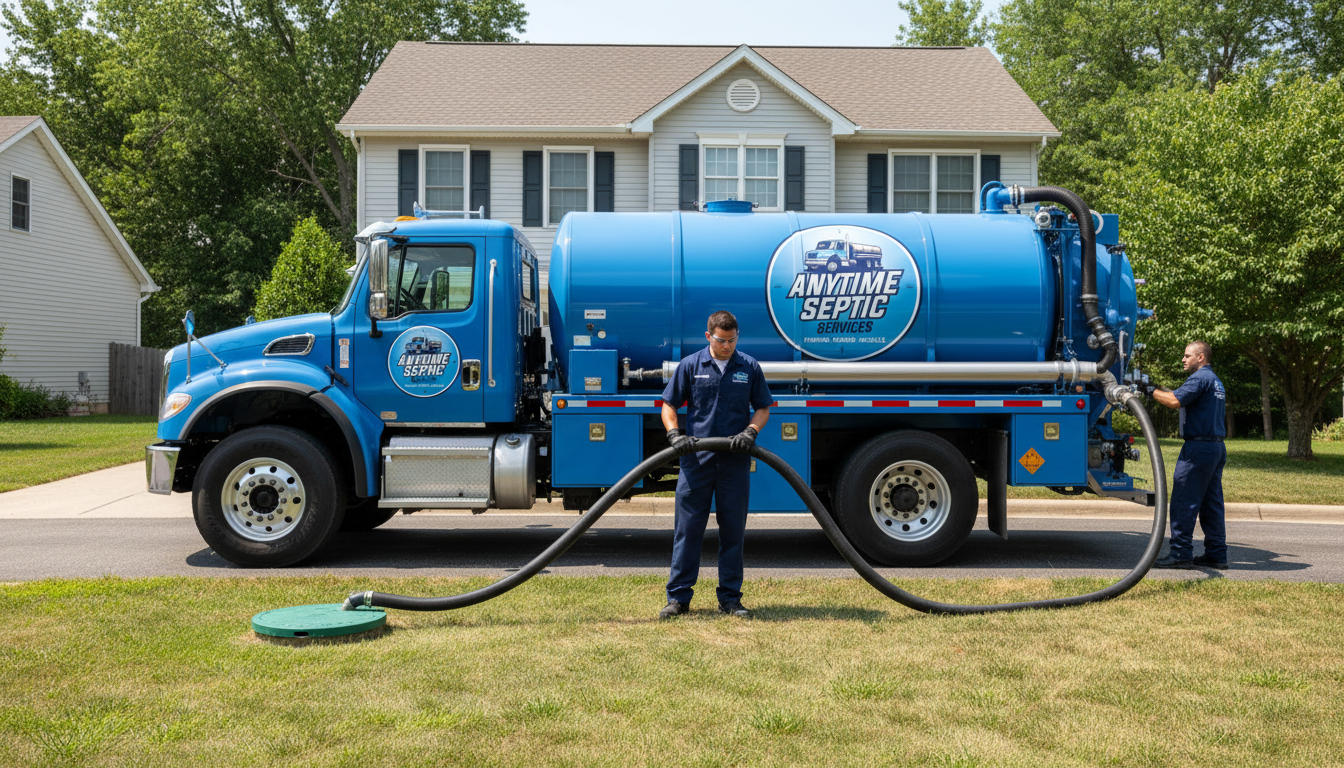
A professional pumper inspects the tank for cracks or damage during service. They check the drain field for signs of failure. They evaluate sludge level and scum thickness to confirm pumping was needed. They may test flow rates and check the outlet filter if your tank has one.

Request a written receipt showing the date of service, tank size, amount of waste removed, and inspection findings. Keep this documentation with your maintenance records. This paperwork proves you maintained your system properly and documents that you pump every few years as recommended.

Maintenance Tips to Extend Your System’s Life

Fix leaks immediately. A leaking toilet can waste thousands of gallons yearly and fill your tank much faster than normal household wastewater loads.

Spread out laundry. Run loads throughout the week instead of multiple loads in one day. This reduces water flow into your tank and prevents overloading.

Take shorter showers. Every gallon saved reduces tank filling speed and extends time between pumpings.

Install a filter. If your tank doesn’t have an effluent filter, ask your pumper about installing one. This prevents solids from clogging your drain field and extends its life significantly.

Get routine maintenance inspections. Have your system inspected every one to three years by a professional. Early detection of problems saves money and prevents failing systems from requiring complete replacement.

Follow your pumping schedule. Mark your calendar and set phone reminders. Regular pumping is the single most important maintenance task you can do to keep your system working properly.

Properly maintain your drain field. Keep heavy equipment and vehicles off the area. Don’t plant trees near the drain field. Avoid pesticides near the system that can damage soil bacteria.

Monitor what goes down the drain. Be cautious about what you flush. Protect your system by maintaining awareness of household habits.

When You Need Professional Help

Most septic system failures happen because pumping is delayed or skipped entirely. If you’re unsure about your system’s condition, get a professional inspection. It’s much cheaper than dealing with a backup or system failure requiring major repairs.

Look for a service provider licensed by your state. Ask for references and verify their experience with tank repairs, inspections, and pumping. Confirm they carry liability insurance. Never hire someone without proper credentials or documentation of their qualifications.

The EPA provides septic system guidance and additional resources at www.epa.gov/septic where you can find licensed contractors and educational materials.

Keep records of every pumping, inspection, and repair. This documentation helps prove you maintained your system properly and protects you if issues arise later.

Your septic tank is too important to ignore. Contact Anytime Septic today for professional pumping, inspection, and maintenance services in the Smyrna, Georgia area. We’re here to keep your system working properly and prevent costly repairs.