678-848-4365
service@anytime-septic.com
Business Hours Mon - Sun | Open 24 Hours

Dallas and Cartersville Septic Maintenance Checklist

Crew_inspecting_residential_septic

Dallas and Cartersville Septic Maintenance Checklist begins with understanding that a septic system is a connected treatment system, not merely a tank that occasionally needs service. Wastewater moves from the building to the tank, then through outlet and distribution components to the soil treatment area. A symptom can begin at any point in that path, so the right service depends on diagnosis rather than guesswork.

The short answer

Slow drains, sewage odors, wet ground, backups, gurgling, or unusually green growth near septic components deserve attention. Pumping may be part of maintenance, but it does not correct every pipe, baffle, distribution, or drain-field problem. When warning signs appear, start with a professional evaluation and the system’s service history.

How the system handles wastewater

The tank holds wastewater long enough for solids to settle and floating material to separate. Liquid leaves through the outlet and moves toward the absorption area. Each component depends on appropriate flow and usable capacity. Excess water, accumulated solids, damaged components, or soil-area problems can affect the entire system.

Signs to document before scheduling service

  • Whether one drain or several drains are slow
  • Gurgling after toilets, laundry, showers, or appliances discharge
  • Indoor or outdoor sewage odors
  • Wet, soft, or unusually green areas near the tank or field
  • Backups into tubs, showers, or low fixtures
  • Dates of prior pumping, inspection, or repair
  • Recent changes in household size or water use

 

Homeowner_observing_wet_septic

Inspection, pumping, maintenance, and repair are not identical

A septic inspections visit evaluates accessible conditions for a defined purpose. septic tank pumping removes accumulated contents from the tank. Maintenance can include monitoring, records, and preventive service. septic repair addresses a diagnosed failure. A homeowner should know which service is being ordered and what questions it is expected to answer.

What affects a pumping or maintenance schedule

Household size, wastewater volume, tank capacity, solids accumulation, garbage-disposal use, water leaks, system design, and prior condition all influence service needs. A generic calendar interval is not a substitute for records and inspection. Keep every service invoice, system sketch, access-point photo, and repair note with the property documents.

Protect the drain field between visits

  • Do not drive, park, or place heavy structures over septic components.
  • Direct roof and surface drainage away from the absorption area.
  • Repair plumbing leaks that send unnecessary water into the system.
  • Avoid flushing wipes, grease, hygiene products, and other non-degradable material.
  • Know the location of the tank and field before landscaping, fencing, or construction.
  • Keep deep-rooted plantings away from components where roots may create problems.


What to expect from a useful service visit

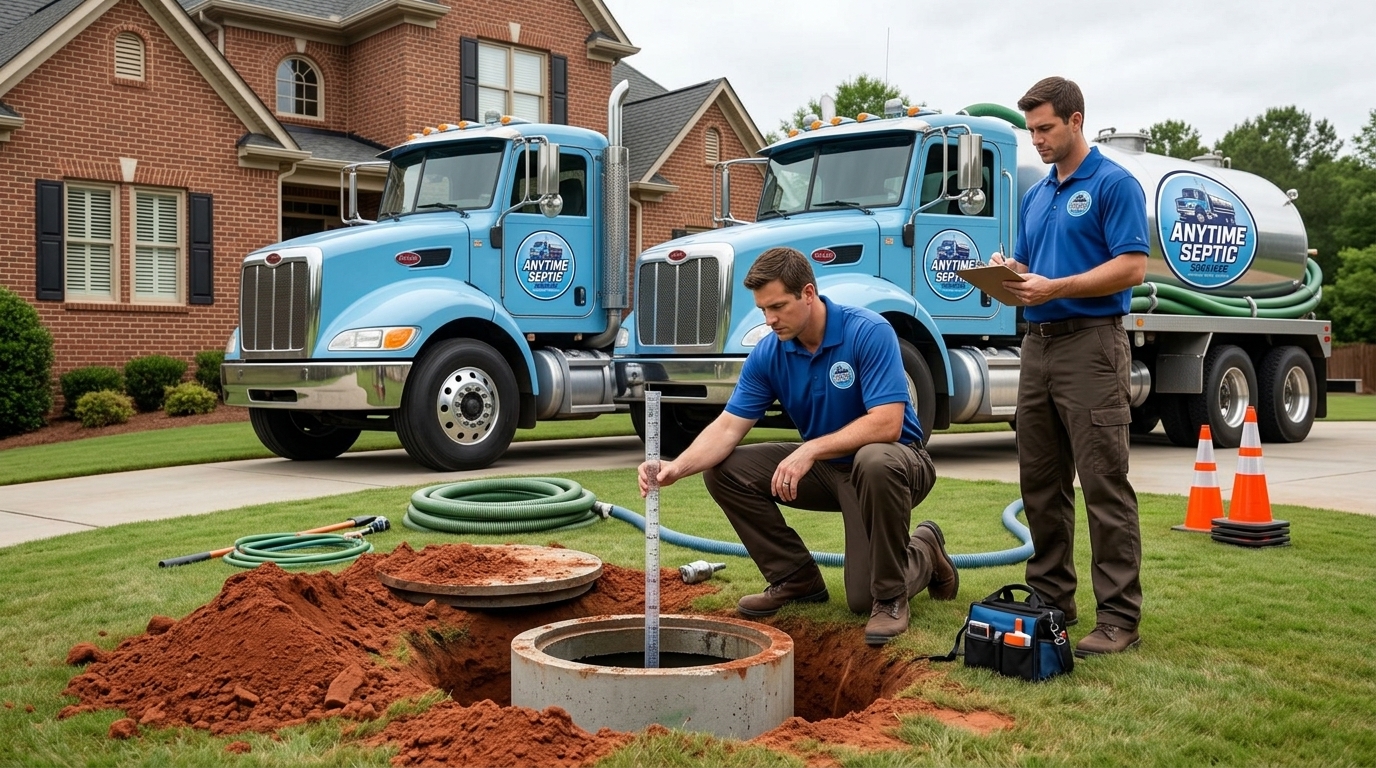
The technician should review the reason for the visit, known history, visible site conditions, access, and the condition of accessible components. The findings should separate observed facts from recommendations. If a repair is suggested, ask which component failed, what evidence supports the conclusion, and whether other parts of the system should be evaluated before work begins.

Warning signs that should not wait

A sewage backup, exposed wastewater, or surfacing effluent creates an immediate sanitation and property concern. Reduce water use, keep people and pets away from the affected area, and contact a septic professional. Do not enter a tank, lean into an opening, or attempt confined-space work.


Septic_technician_inspecting_tank

Frequently asked questions

Does pumping fix a failing drain field?

No. Pumping removes tank contents but does not restore every soil absorption or distribution problem.

Can additives replace pumping?

No product eliminates the need to monitor solids and service the system appropriately.

Should odors be ignored if drains still work?

No. Persistent odors can indicate a venting, plumbing, tank, or field condition that should be evaluated.

What records help during an inspection?

Bring installation information, permits if available, pumping dates, repair invoices, property sketches, and notes about symptoms or water use.

Choose the service that matches the evidence

If you need help with septic maintenance Dallas Cartersville in Dallas and Cartersville, GA, contact Anytime Septic. The goal is to determine whether the property needs maintenance, pumping, inspection, or a specific repair—not to apply the same service to every symptom.