Why does soil matter to a septic drain field?
The drain field receives effluent after wastewater has passed through the septic tank.
That wastewater must then move into suitable soil as part of the onsite treatment and dispersal process.
This means the drain field is not simply a network of buried pipes. The surrounding soil is a functional part of the system.
When evaluating a failing field, understanding both the buried components and the surrounding site conditions is essential.
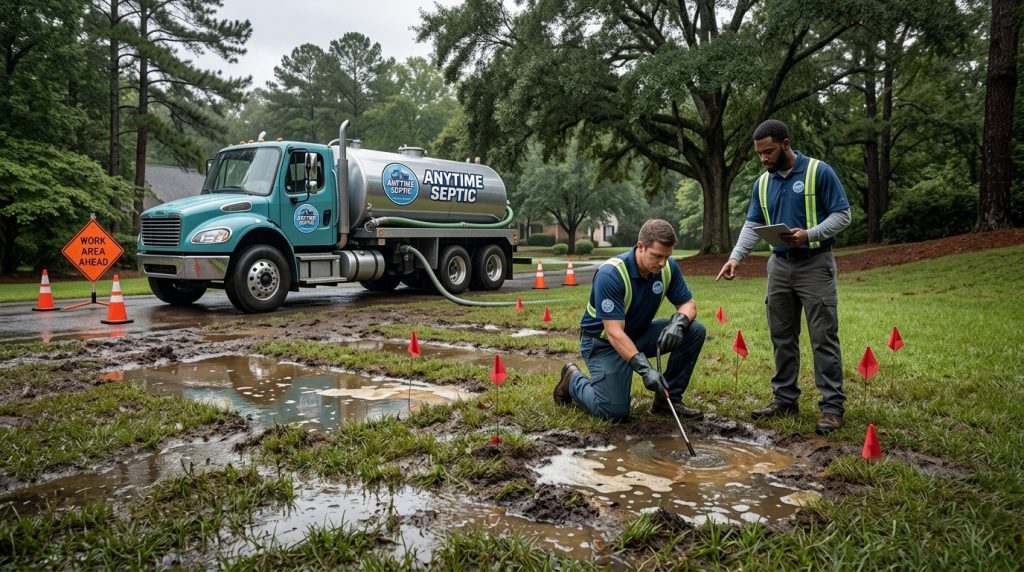
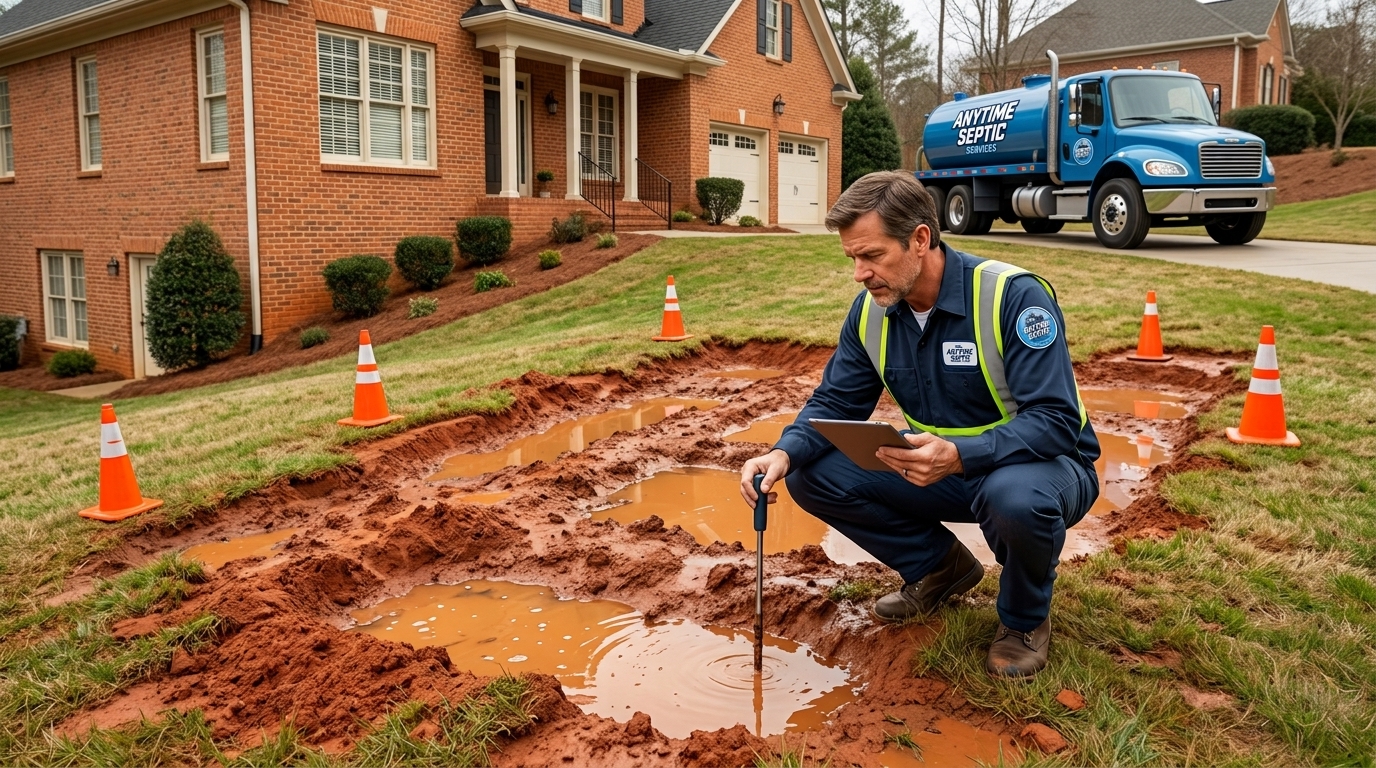
What does a saturated septic drain field look like?
Possible warning signs include:
- Soggy soil over the field
- Standing water
- Wastewater surfacing
- Septic odors outside
- Slow household drains
- Recurring backups
- Symptoms that return after pumping
If your main symptom is moisture outside, see why the ground may be wet over your septic drain field.
Do not assume that greener grass alone proves drain-field failure. Look at the full pattern of symptoms.
Can heavy Georgia rain affect a septic drain field?
Periods of heavy rainfall can increase soil moisture around a septic system.
When soil is already very wet, its ability to accept additional water can be affected. Existing septic problems may also become more noticeable during wet weather.
Homeowners can help by directing unnecessary surface water away from the septic area where practical and avoiding excessive household water use when the property is extremely saturated.
If backups, sewage odors, or surfacing wastewater occur, professional evaluation is appropriate.
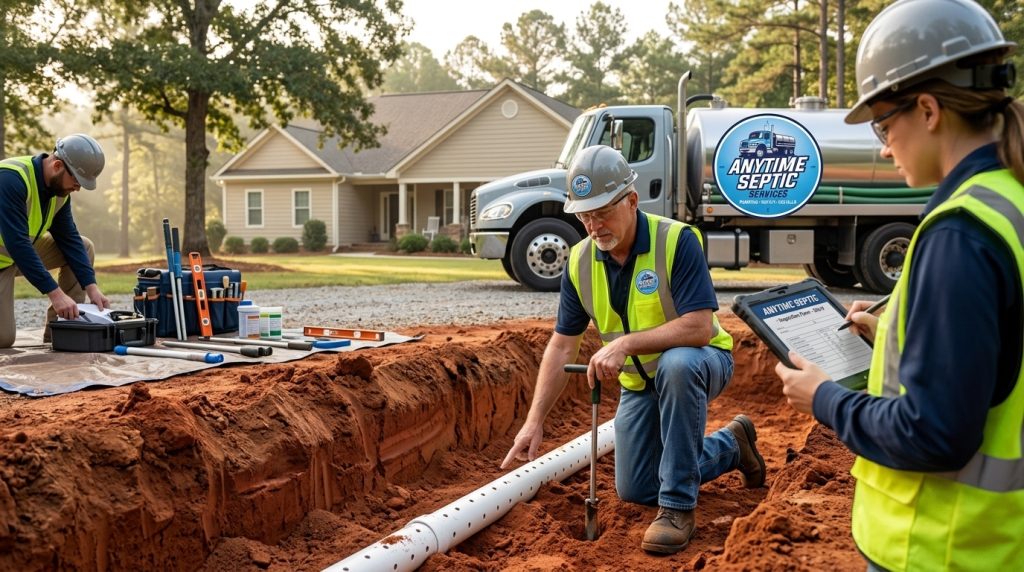
Can field lines be repaired in clay soil?
Whether a field line can be repaired depends on the actual failure.
If a specific buried component is damaged, the solution may involve a localized repair. If the problem involves the ability of a larger absorption area to handle wastewater, simply repairing a section of pipe may not correct it.
That distinction is central to septic field line repair.
A contractor should determine whether the problem is with a component, wastewater distribution, the absorption area, or a combination of factors.
Why does my septic system work when it’s dry but struggle after rain?
A pattern tied to wet weather can provide useful diagnostic information.
If symptoms consistently appear when the property is saturated, surrounding soil and drainage conditions may be contributing to the system’s difficulty handling wastewater.
That does not necessarily tell you what repair is needed.
A professional should consider:
- Where the symptoms occur
- Whether the field is surfacing wastewater
- How the system behaves during dry weather
- Household water use
- Condition of septic components
- Site drainage
The pattern can help guide the evaluation.

Can adding soil over a drain field fix drainage problems?
Do not make significant changes to the grade, soil depth, or drainage around a septic field without understanding how they may affect the system.
Drain fields are designed around specific site conditions.
Likewise, avoid:
- Building structures over the field
- Creating parking areas over it
- Routinely driving heavy vehicles across it
- Directing large amounts of runoff toward it
- Excavating septic components without proper knowledge
If you’re considering landscaping or grading near your septic system, identify the system location first.
Does a failing drain field always need replacement?
No. The appropriate solution depends on what failed.
Some problems may involve repairable components or limited sections. Others may involve broader conditions that require more extensive work.
That is why Anytime Septic recommends determining the cause and extent of the problem before choosing between drain field repair and replacement.
The correct solution should fit the actual system and property.