Why Acworth Is Tough on Septic Systems
Acworth straddles the Cobb County and Cherokee County line, though most of the residential neighborhoods fall on the Cobb side. The area has a few things working against septic systems that homeowners should know about.
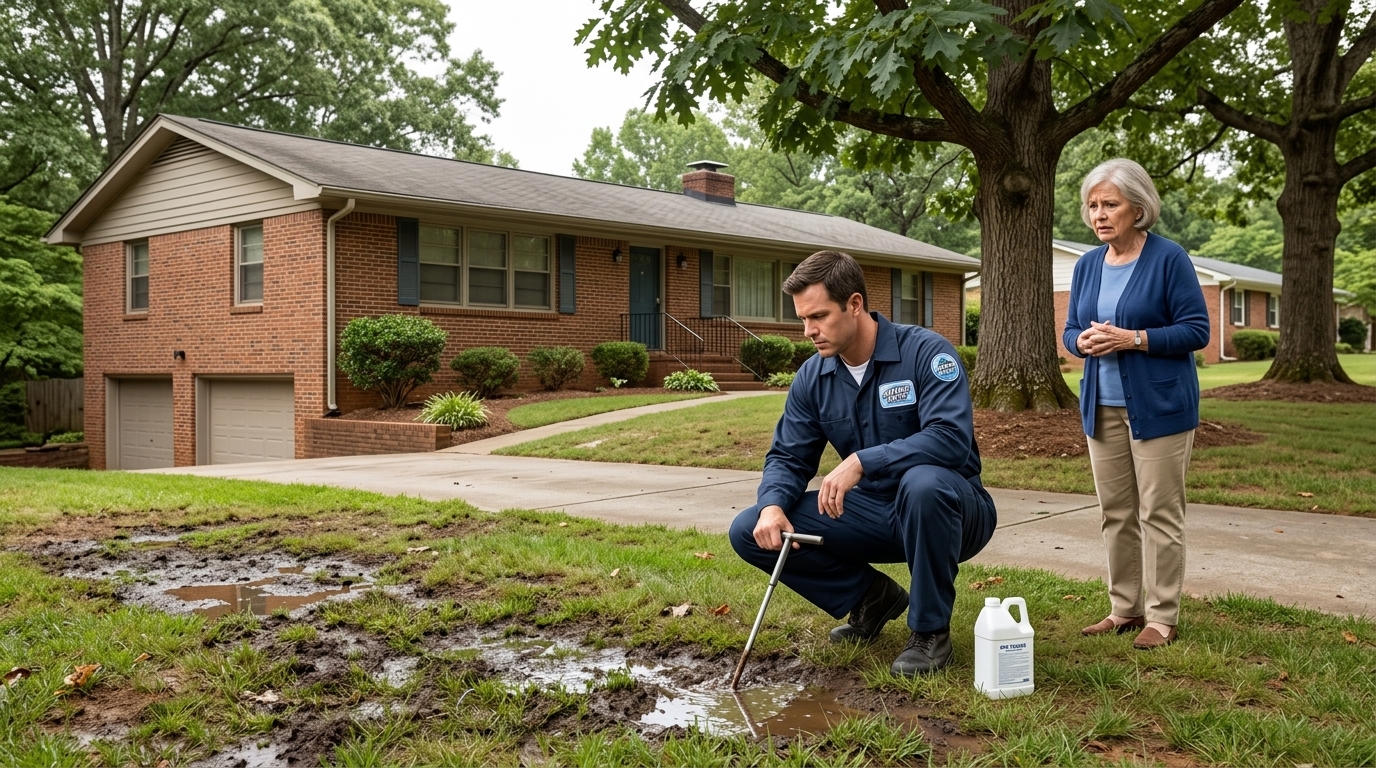
Georgia red clay. The soil in Acworth and throughout Cobb County is heavy red clay. Clay holds water instead of letting it pass through, and that’s a problem for drain fields. Your drain field depends on soil absorption to filter and treat wastewater. When the soil is clay-heavy, absorption is slower, and it doesn’t take much to push a drain field past its limits.
Lake Allatoona. Parts of Acworth sit close to Lake Allatoona, and the water table runs higher in those corridors. A high water table means the ground is already saturated before your drain field even tries to do its job. Homes near the lake or in low-lying areas deal with this more than properties up on the ridgelines.
Homes changing hands. Acworth is a growing community. People buy and sell here all the time. A lot of new homeowners move in from areas served by city sewer and have never owned a home on septic before. They don’t know the maintenance schedule, they don’t know the warning signs, and they don’t find out until something goes wrong.
Drain Fields Past Their Lifespan
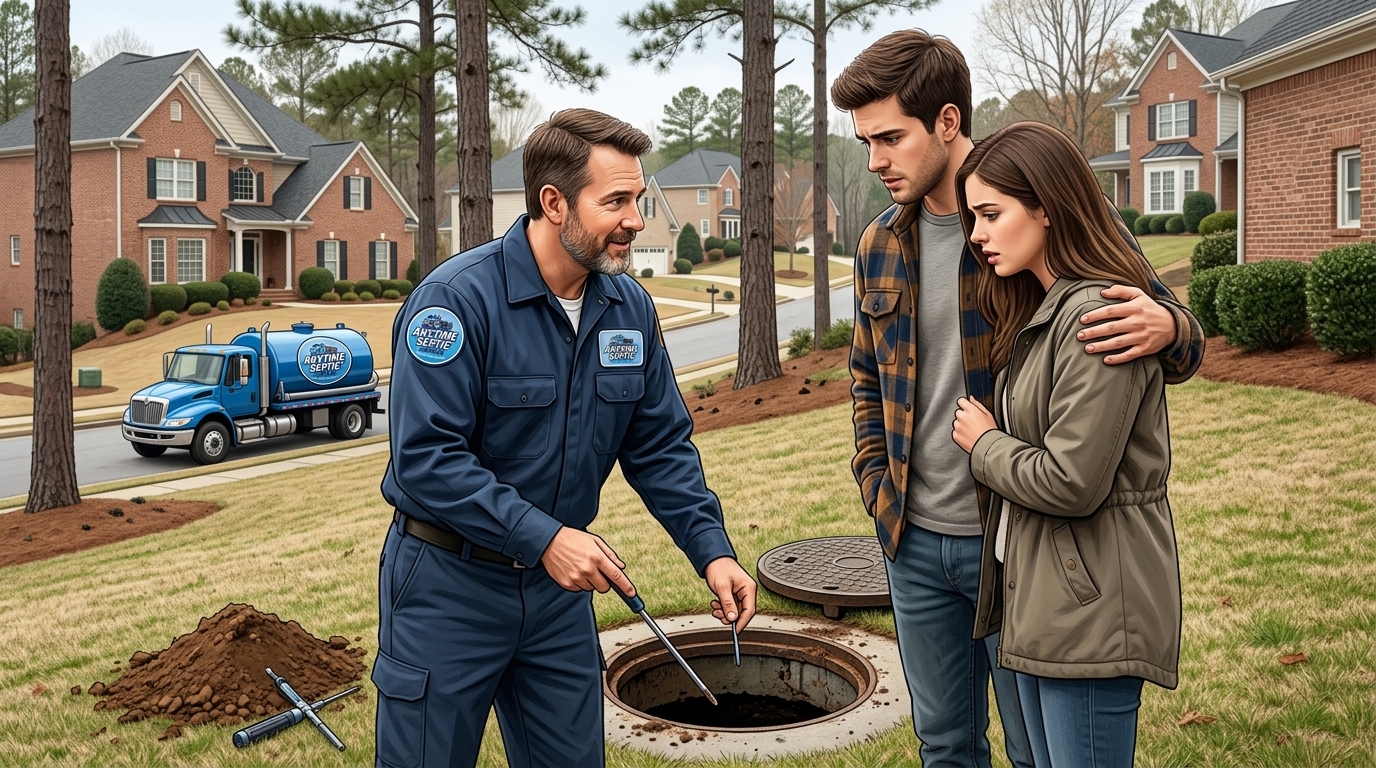
A well-maintained drain field can last 20 to 30 years. Some go longer. But many of the systems in these older neighborhoods were installed when the homes were built and have never been replaced. If your home was built in 1985 and still has the original drain field, that system is over 40 years old. Even with good maintenance, the soil around those lines has been filtering effluent for decades, and clay soil compacts and seals over time.
We see this pattern regularly in Acworth: an older home, a tank that’s been pumped on schedule, but a drain field that finally gives out because the soil just can’t absorb anymore.
Problems in Newer Homes (2000s and Later)
The newer subdivisions in Acworth come with their own set of issues. The systems are younger, but that doesn’t mean they’re trouble-free.
System Overload
A lot of these homes are bigger. Four or five bedrooms, three bathrooms, large families. The septic system was sized for the home when it was built, but if the household has grown since then, the system takes a beating. Adding a bathroom, converting a basement into a living space, or having extended family move in all increase the daily water load on the tank and drain field.
First-Time Septic Owners
Many buyers in newer Acworth subdivisions are coming from homes on city sewer. They don’t realize they’re on a septic system, or they don’t understand what that means for daily habits. We get calls from homeowners who have been flushing wipes, pouring grease down the kitchen sink, and running five loads of laundry every Saturday for years. All of that catches up with the system eventually.

The Five Most Common Problems We See in Acworth
1. Drain Field Saturation From Clay Soil
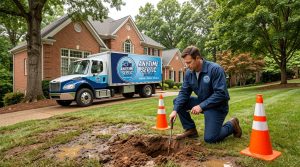
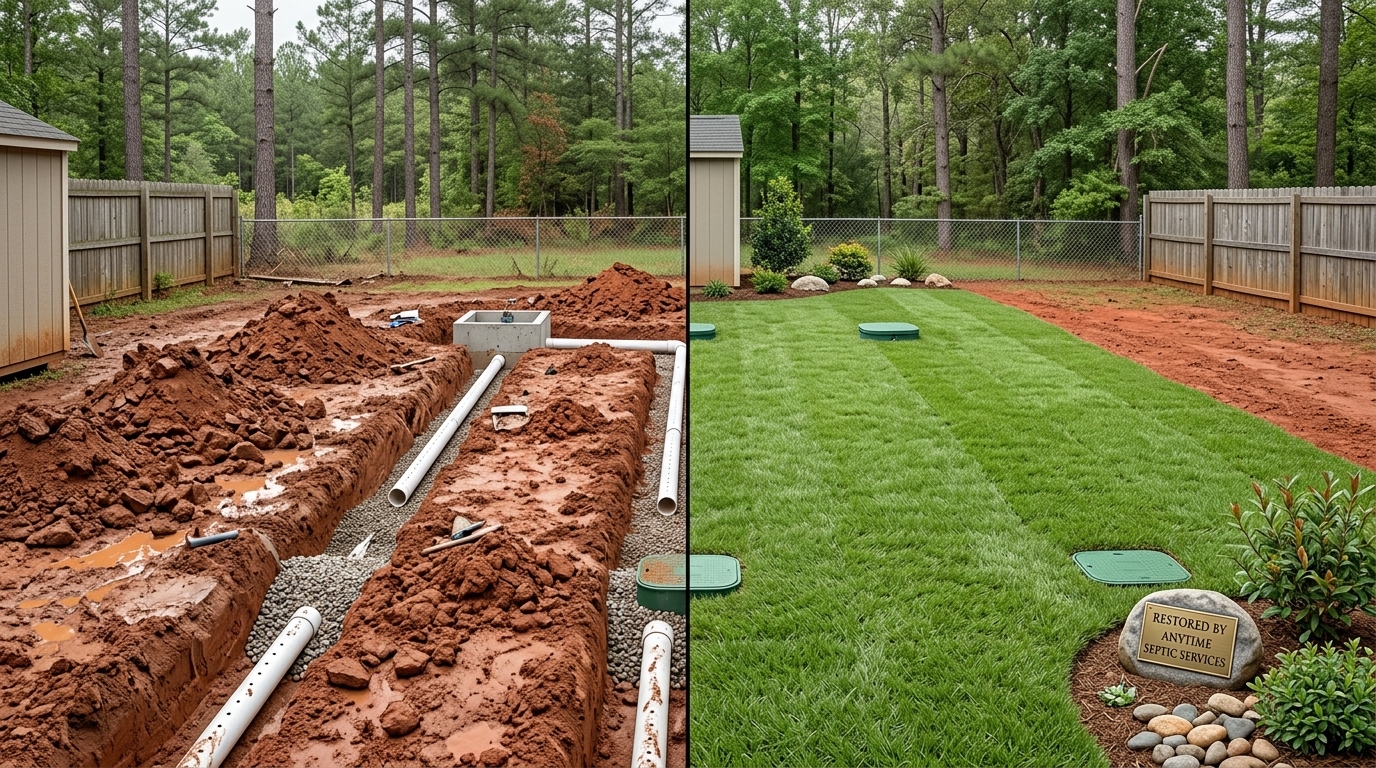
This is the number one issue in Acworth and across Cobb County. The red clay that covers this part of Georgia is terrible at draining water. When a drain field is installed in clay-heavy soil, the system works harder from day one. Over time, that clay compacts around the gravel trenches and the perforated pipes. Effluent can’t seep through fast enough, and the field saturates.
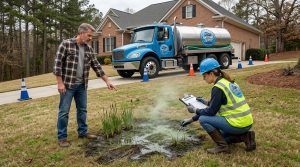
Warning signs: Wet or soggy spots in the yard over the drain field, standing water that doesn’t dry up even after days without rain, and a sewage smell near the field lines.
If your drain field is struggling, read our full breakdown on signs your drain field is failing so you know what to watch for.
2. Tree Root Intrusion
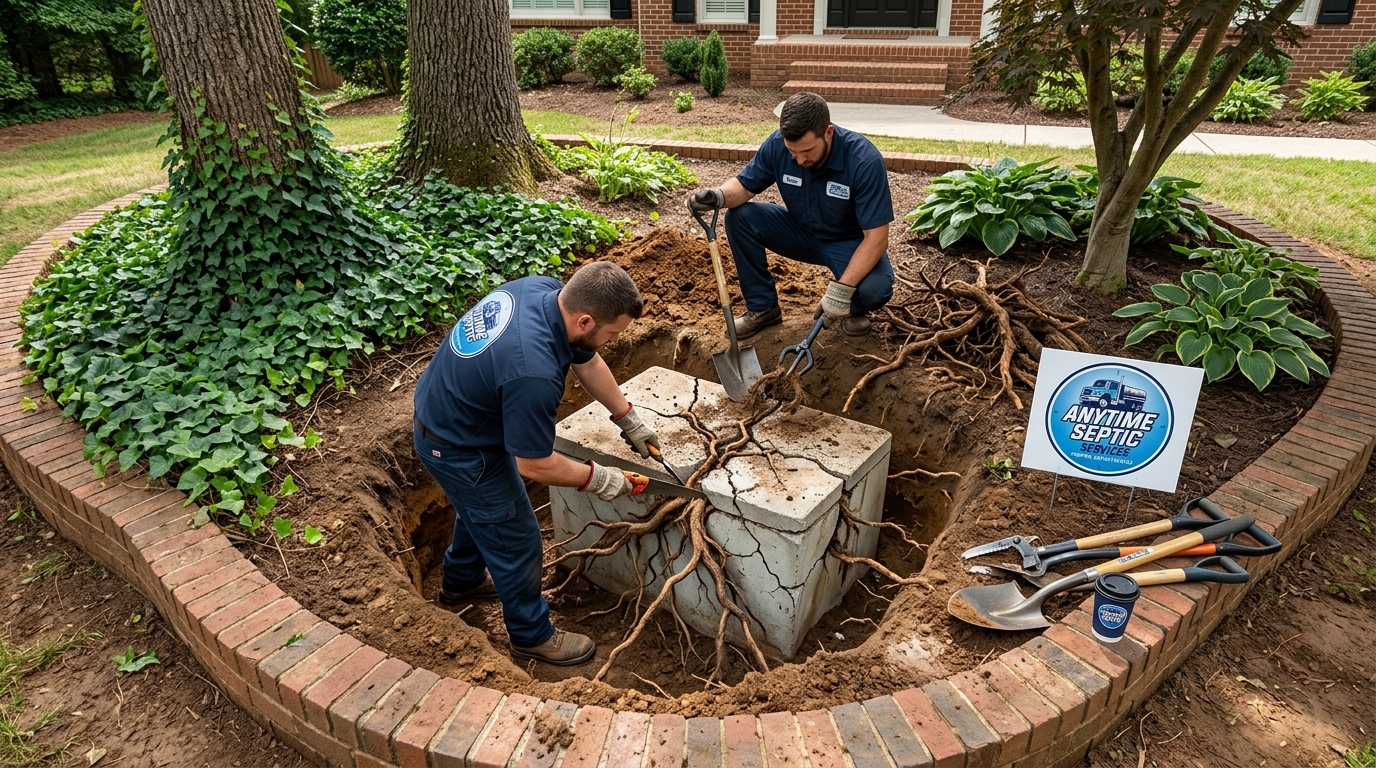
Acworth’s older neighborhoods have mature landscaping. Big oaks, tall pines, and large hardwoods that have been growing for 40 or 50 years. Those trees send roots out a long way looking for water, and your septic lines and drain field are full of it.
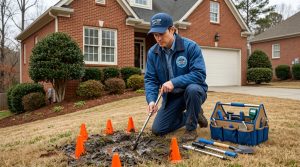
Roots grow into pipe joints, crack through concrete tank walls, and infiltrate drain field lines. Once inside, they block the flow and cause backups. We’ve pulled root balls the size of a basketball out of distribution boxes in Acworth. If you have large trees within 30 to 50 feet of your tank or drain field, root intrusion is a real concern.
Warning signs: Slow drains that keep coming back after clearing, gurgling sounds in the plumbing, and one section of the drain field that seems to be failing while the rest works fine.
3. High Water Table Near Lake Allatoona
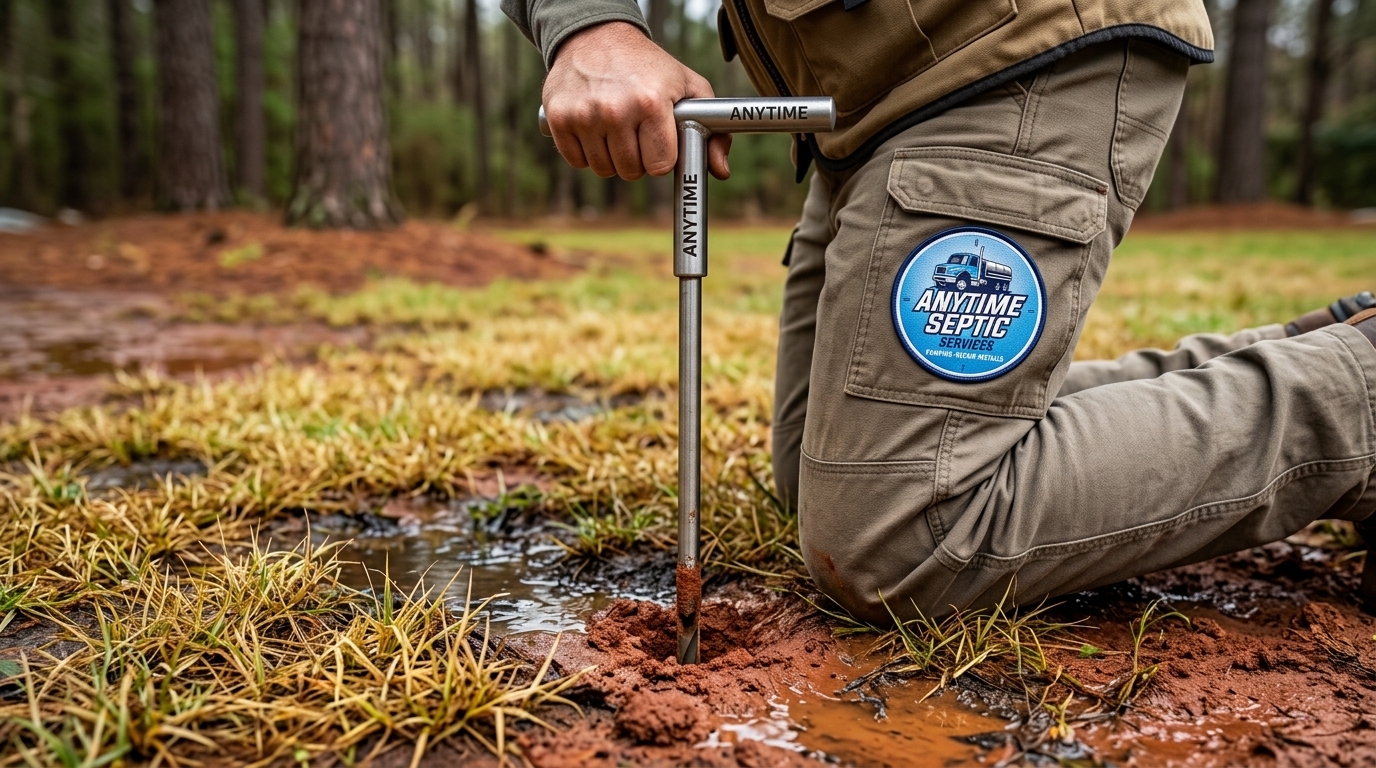
Properties in the corridors near Lake Allatoona and the lower-elevation areas around Acworth can deal with a seasonally high water table. When the water table rises, it pushes up against the bottom of your drain field. The field needs dry soil underneath it to filter effluent properly. If groundwater is already sitting at the level of your drain lines, the system can’t do its job.
This problem gets worse during spring and early summer when rain is heavy and the lake level rises. We see more drain field issues in these areas between March and June than any other time of year.
Warning signs: Standing water in the yard during wet seasons even when the system was working fine during dry months, slow drains that coincide with rainy stretches, and sewage odors that come and go with the weather.
4. Overloaded Systems
This one shows up in both older and newer homes. A system that was sized for a three-person household 20 years ago is now serving a family of six. Or a homeowner finished the basement and added a full bathroom and a kitchenette, doubling the plumbing fixtures without upgrading the septic system.
Every gallon of water that goes down a drain ends up in the septic tank. More water means the tank fills faster, solids have less time to settle, and the drain field gets hit with more volume than it was designed to handle. Over time, the system wears out early.
Warning signs: Frequent need for pumping (every year or less), slow drains even after a recent pump-out, and wet areas over the drain field.
5. Neglected Pumping by New Homeowners
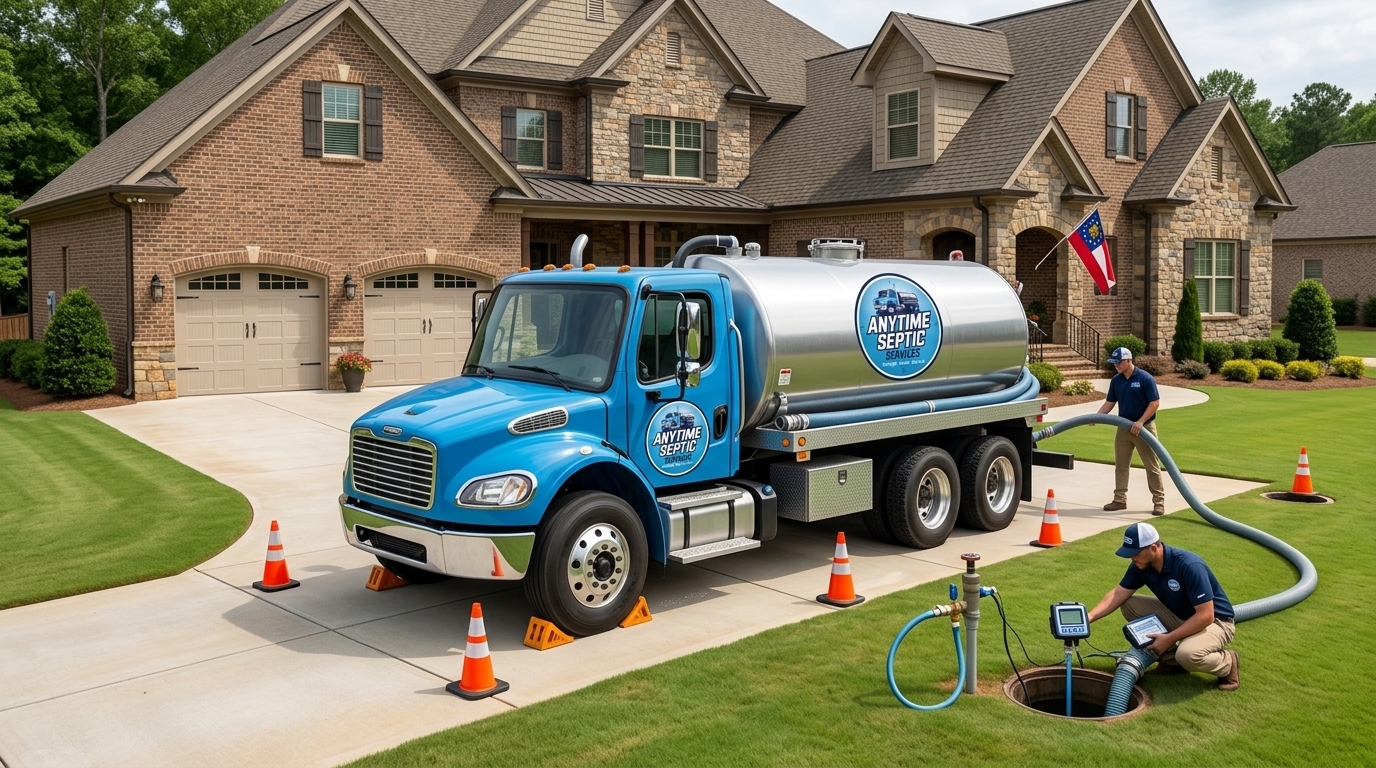
We see this constantly in Acworth. A family buys a home, moves in, and doesn’t realize the septic tank needs regular pumping. Maybe the previous owner didn’t leave maintenance records. Maybe nobody mentioned it during the sale. Either way, the tank goes 7, 10, sometimes 15 years without being pumped.
By the time the homeowner calls us, the tank is full of sludge, the baffles may be damaged, and solids have started flowing into the drain field. At that point, pumping the tank helps, but the drain field may already have taken damage that can’t be undone with a simple pump-out.
Warning signs: You bought your home more than 3 years ago and have never had the septic tank pumped. If that’s you, schedule a pump-out now before small problems turn into expensive ones.
What Do Repairs Cost?
Every property is different, so these are general ranges based on what we see in the Acworth and Cobb County area.
- Septic tank pumping: $350 to $600, depending on tank size and accessibility
- Baffle repair or replacement: $200 to $500
- Minor pipe repairs (root removal, cracked sections): $500 to $1,500
- Distribution box replacement: $500 to $1,500
- Partial drain field repair: $2,000 to $5,000
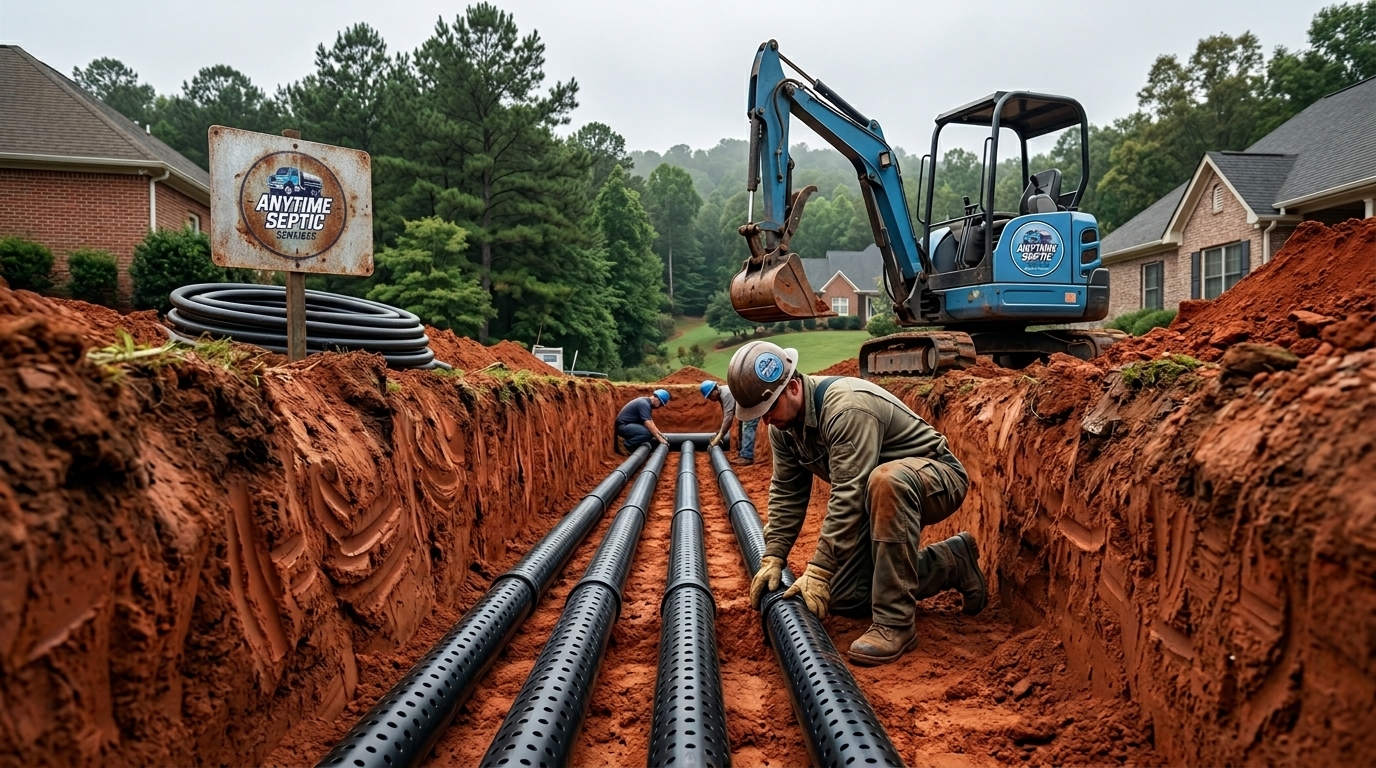
- Full drain field replacement: $5,000 to $15,000 or more, depending on soil conditions, system size, and permitting
The most expensive repair is always the one you put off. A $400 pump-out today can prevent a $10,000 drain field replacement next year.
When to Call a Pro
Some situations can wait a short time. If you notice a faint odor near the tank on a hot day but everything inside the house drains fine, you can monitor it for a few days and then schedule a service call.
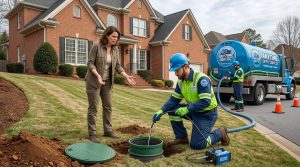
Other situations need immediate attention. Call for septic repair services right away if you notice:
- Sewage backing up into the house through drains or toilets
- Standing water in the yard that smells like sewage
- Multiple drains in the house running slow at the same time
- A large wet area forming over the drain field that wasn’t there before
These are signs that your system is either failing or already failed. Waiting will only make the damage worse and the repair more expensive